
The United States of America stretches across North America from the Atlantic to the Pacific. Its northeast corner holds the country’s oldest cities and its densest history. New York, Boston and the six states of New England sit within a day’s drive of each other. Here, Lower Manhattan, the Freedom Trail, Harvard Yard and the White Mountains all fit into one trip.
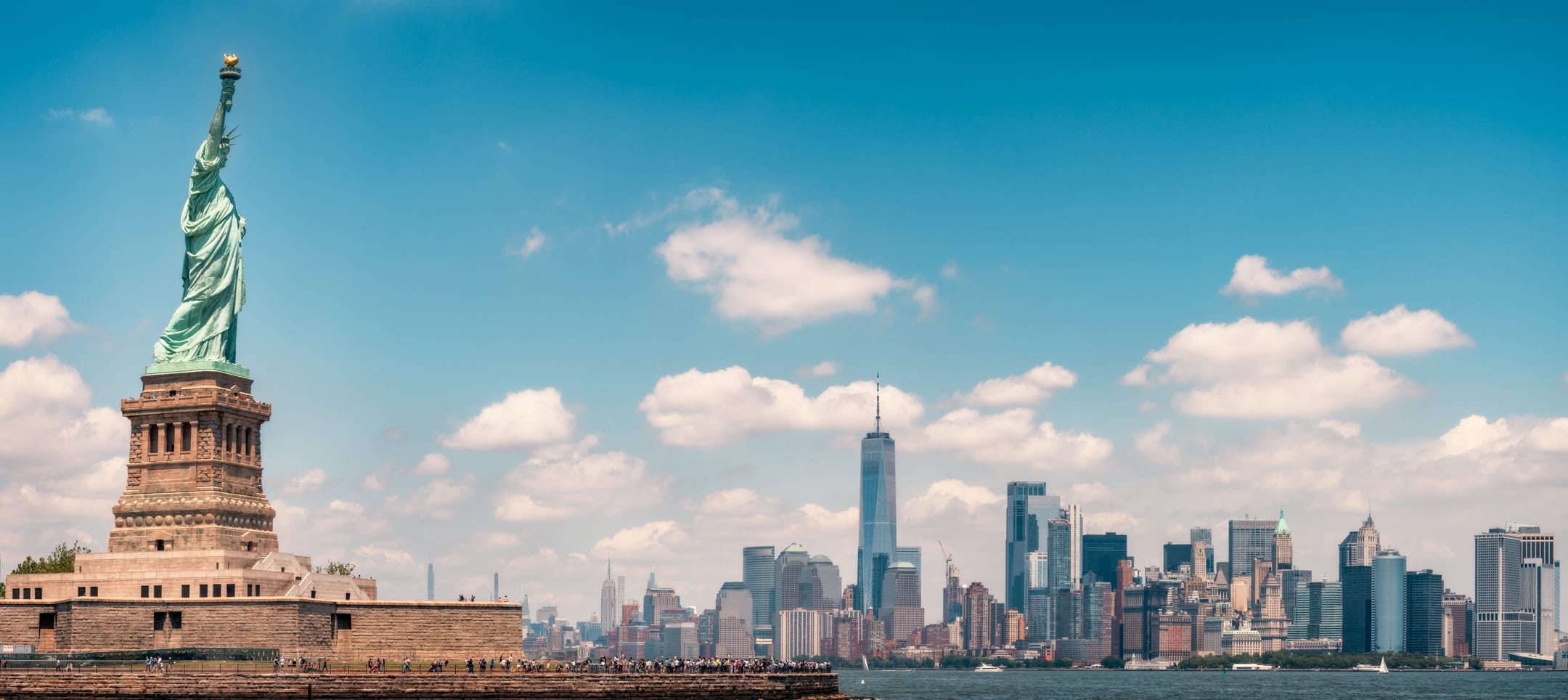
Statue of Liberty
Some places are photographed so often that a new frame seems pointless. The Statue of Liberty is the clearest example. So I set myself one goal there: show it in a way that is just different enough to matter.
On the ferry, I had already taken a dozen tight, centred frames of the statue. Then I waited for the angle to shift. For a few seconds, the boat lined up the statue on one side and the whole of Lower Manhattan behind her. That moment gave me the Statue of Liberty in front of the Manhattan skyline, with One World Trade Center rising above the towers.
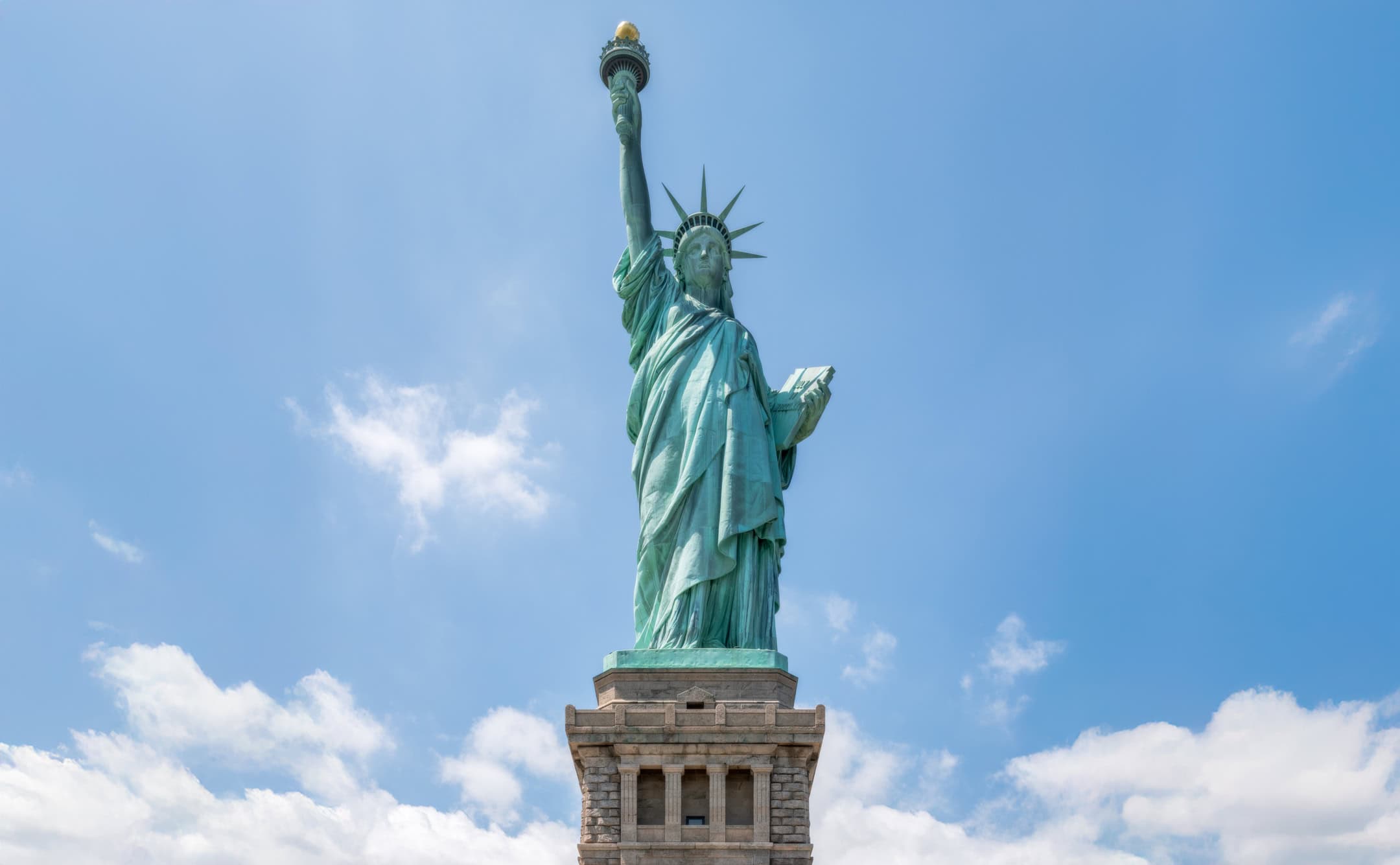
On Liberty Island itself, I went the other way. Standing close to the pedestal, I stacked several frames into a vertical panorama. As a result, Lady Liberty rises above a carpet of clouds, with her torch raised into a clear blue sky. Up close, the green surface turns out to be copper patina, with seams and rivets visible.
The statue was a gift from France, dedicated in 1886. Today, it is a World Heritage Site, listed in 1984.
Ellis Island
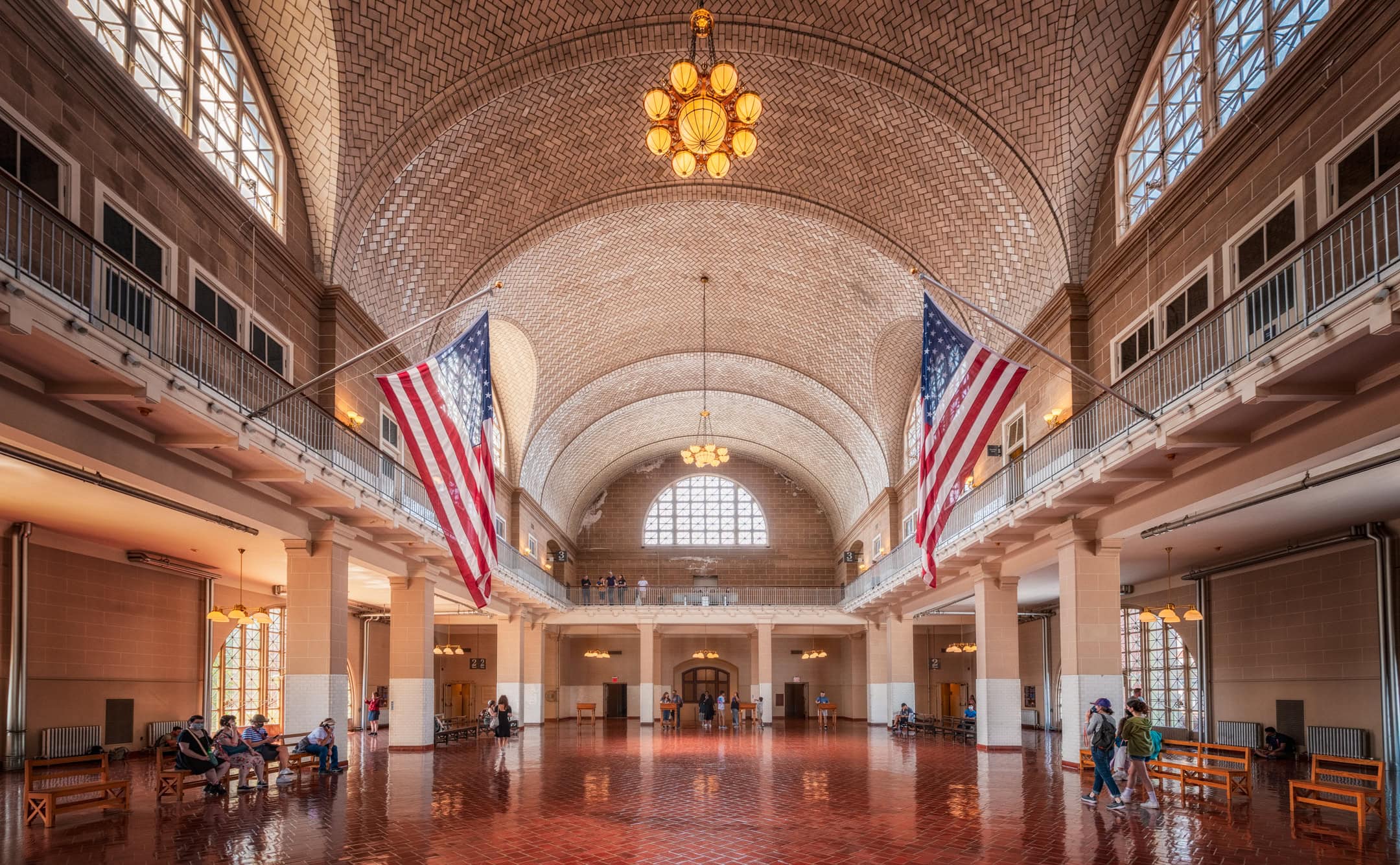
The same ferry continues to Ellis Island. For me, the Ellis Island Immigration Museum was one of the strongest museum experiences anywhere in the world. It takes visitors through the same route that immigrants once walked, from the Baggage Room up to the Registry Room.
More than twelve million people passed through Ellis Island between 1892 and 1954. In the Registry Room, inspectors decided who could enter. At any point, an immigrant could be stopped, questioned or sent back.
Above the hall rises a vaulted ceiling of Guastavino tile. The Guastavino company was founded by Rafael Guastavino, himself a Spanish immigrant. Its interlocking terracotta tiles needed no steel support.
I made my frame of the Registry Room from the entrance on purpose. This is the first view an immigrant had of the hall: two large American flags hanging under the vault. The wooden benches are still in place below them.
New York Harbor
On the way back across the harbour, I had planned a classic skyline frame from the ferry rail. Just as I raised the camera, a sailing boat drifted into the foreground. At first, I was annoyed. Soon, however, I saw that the boat made the picture.
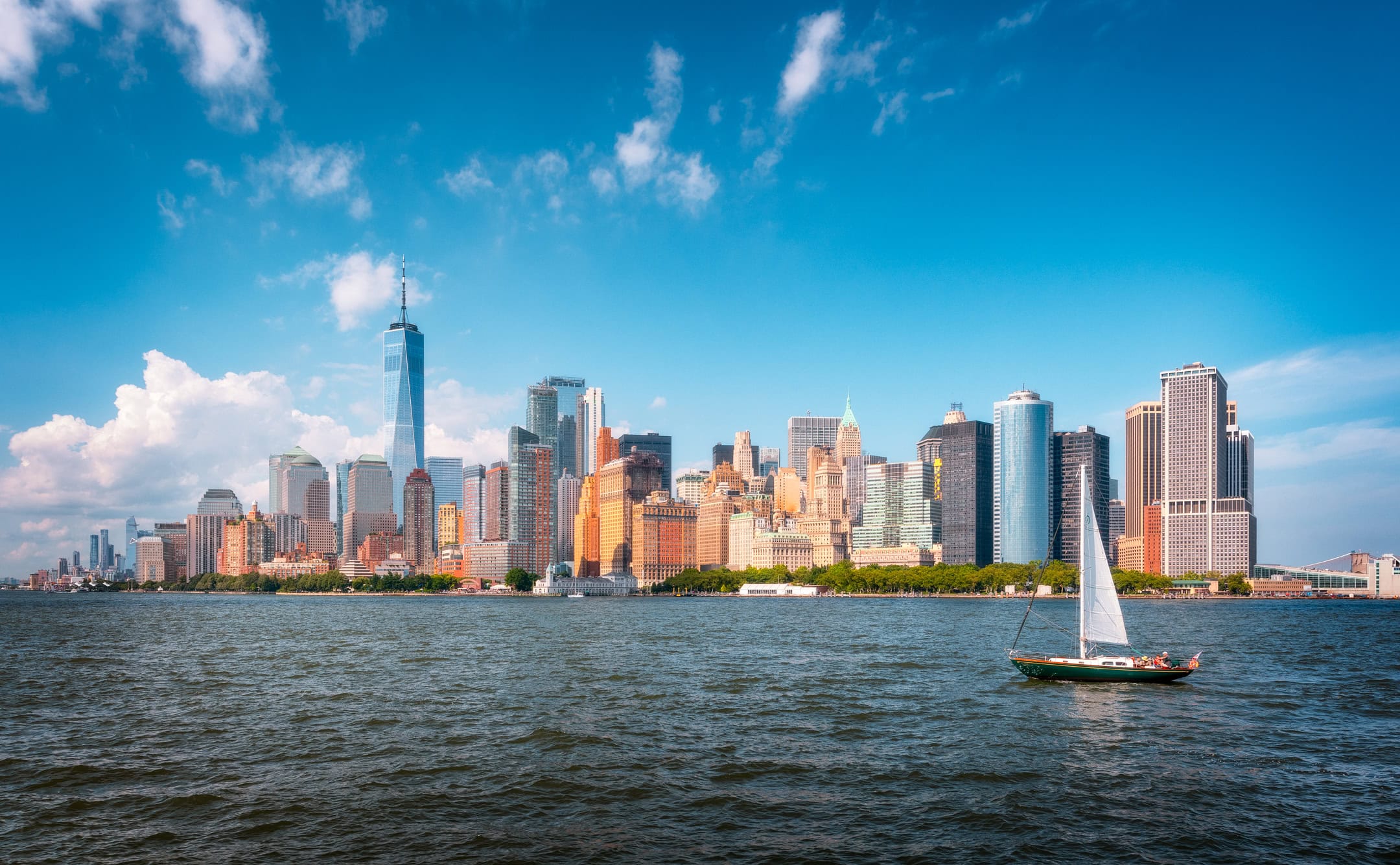
A small sail against the glass and steel of Lower Manhattan gives the frame its scale. Neither element overpowers the other. Moreover, it repeats an old scene. For centuries, people arrived in New York by water and watched the city rise in front of them.
With movement, there is no time to think. So I followed the boat for a few seconds, waited until it sat low in the frame, and fired a short burst. The result is the Manhattan skyline with a sailing boat, one of my favourite New York images. A plan gave me the position. The accident gave me the photo.
A First Trip to the USA
We landed in New York in June 2022. It was our first trip to the United States, and the reason was Daria. Her Lisbon MBA included an entrepreneurship course at MIT, which Covid had moved online in 2021. Later, MIT offered the class in person, so the whole group finally flew over.
First, we spent our days in Manhattan. After that, we moved to Boston, where Daria studied for a week. Meanwhile, I had a free hotel room and a camera. I worked the streets of Boston and the campuses across the river. Then I drove a 48-hour loop through New England, through Massachusetts, New Hampshire, Maine and Vermont.
This guide follows that route. Every photo in it comes from the northeast, from the Statue of Liberty to Mount Washington. The western national parks are still on my list.
New York City
New York is a city of giants, and the streets give you very little room to shoot them. Therefore, the best way to understand Manhattan is from above.

My most vivid evening there came on a rainy day at Rockefeller Center. The rain came and went for hours. Even so, I stayed, because the best light arrives right after a storm, when the air is still wet. Eventually, the clouds opened over the west, and the sky turned gold.
For the New York panorama at sunset, I went wider than the usual frame. It was Pride Month, so several towers glowed in rainbow colours. The Empire State Building stands in the centre, with Lower Manhattan behind it. Look closely, and the Statue of Liberty appears as a tiny silhouette near the horizon. On the right, a helicopter hangs over the harbour.
This is the frame that explains the city at a glance. In addition, it shows how dense Midtown really is.
Lower Manhattan
Lower Manhattan is where the money lives. I have always been fascinated by economics and investing, so Wall Street was high on my list.
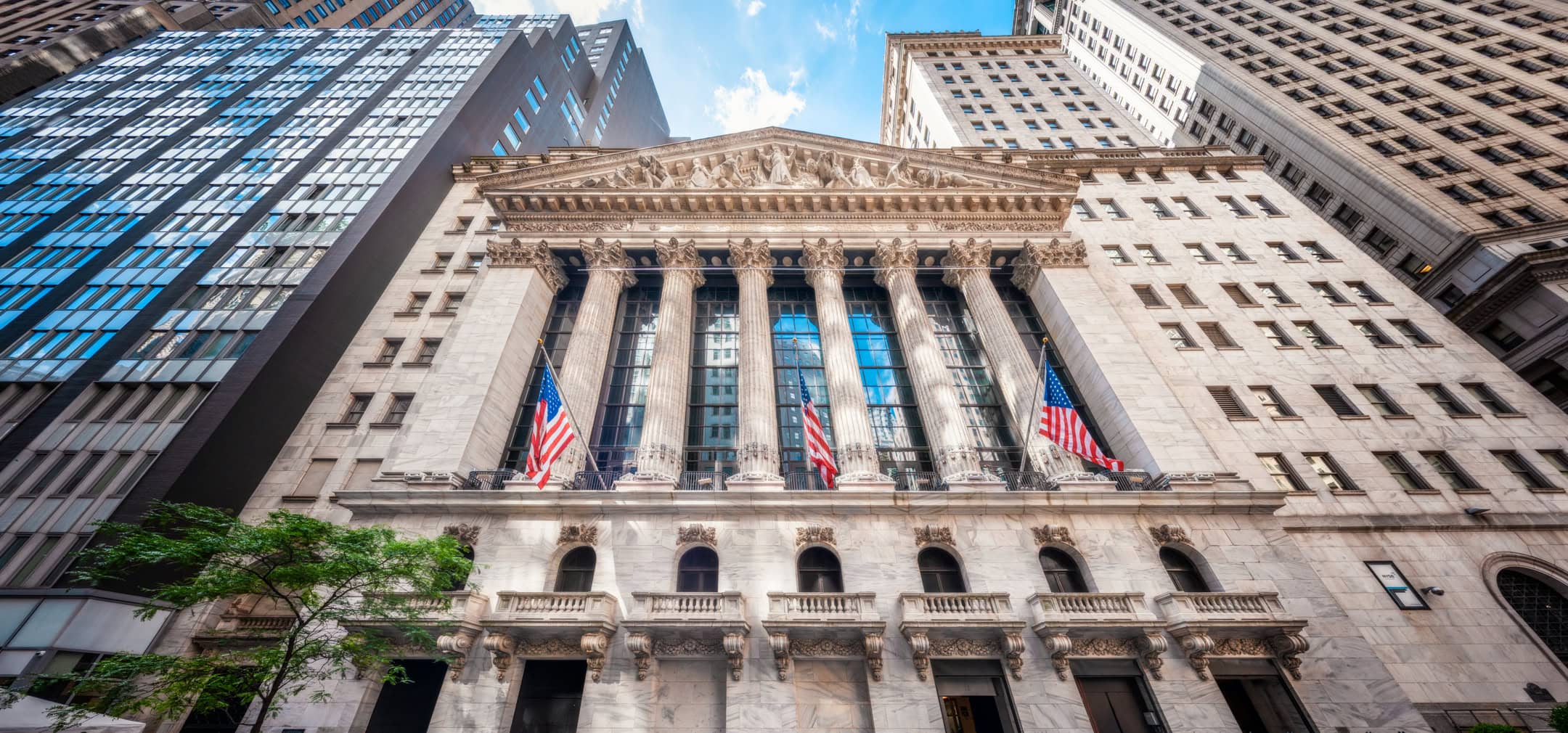
The current New York Stock Exchange building opened in 1903. George B. Post designed it in the Beaux-Arts style, with six giant columns and a sculpted pediment. Yet the street around it is crowded and narrow, and parts of it are closed for security. As a result, there is almost no room to step back.
So I used that confinement. Looking up, I let the skyscrapers press in on the New York Stock Exchange façade, with three flags between the columns.

A few blocks north stands the World Trade Center Station by Santiago Calatrava. Its white ribs bend the daylight that falls through the skylight. However, the hall was full of commuters at midday. To reach the stillness of the Oculus, I blended several frames to clear the floor while keeping the light exactly as it was.
Midtown Manhattan
Midtown is the New York of films, and it is hard work for a photographer. The streets are narrow, the crowds never stop, and the buildings are enormous.
At Times Square, standing still with a camera is a challenge in itself. Hundreds of thousands of people cross it every day. Besides, the billboards throw so much light that the air looks hazy. I pointed the lens upward at dusk, with the neon flag of the Armed Forces recruiting station in the corner.

Grand Central Terminal opened in 1913, and train stations have always fascinated me. The obvious frames are the clock, the flag and the symmetry. Instead, I took the escalator down and back up again many times. At 14mm, the carved sign frames the main concourse of Grand Central like a stage.
Further south, Macy’s at Herald Square had rainbow colours across its ground floor for Pride. On a day with a clean blue sky, I made the Macy’s Herald Square façade as a single 14mm exposure.
Fifth Avenue
Trump Tower was on my list long before politics. I studied business, and the tower was part of the business television and books of that time. So I went to see it for myself.

Outside, I framed the gold street clock and the glass tower together, with the American flag in the lobby below. That gave me Trump Tower and its clock on Fifth Avenue, warm gold against a blue sky.
Inside, the atrium is as golden as the facade. Since many visitors came for selfies, finding a clean angle took time. In the end, I built the Trump Tower interior around a long row of flags. They lead toward a small display about the 45th president. On one side stands a single person; on the other, flags that will outlast any president.
Central Park and the High Line

I always book a hotel with a view. In Manhattan, the Residence Inn at Central Park went further and opened its rooftop for us, which is normally closed to the public. On a June evening, the clouds over the park were spectacular.
From that roof, Central Park lies behind Billionaires’ Row, with the super-tall towers catching the sunset. An apartment in One57 sold for $100.47 million. Later, a buyer paid $238 million at 220 Central Park South.
Later that night, I made Billionaires’ Row at blue hour from our corner room. Shooting through glass brings reflections. So I crawled behind the TV, pulled the curtains around me and covered the camera with a dark t-shirt.
The next day we walked into the park. After climbing some rocks, I found a gap in the trees. Holding one branch aside, I framed the Manhattan towers through the leaves of Central Park.

On the west side, the High Line turns an old elevated rail line into a park one floor above the street. Near the end of our walk, I waited ten minutes for a yellow cab in the sun beneath the High Line.
History of Boston
Boston is the largest city in New England, and its history is the history of the American Revolution. On our first day there, we simply walked and let the streets lead us.

Soon we stumbled on Old City Hall, one of the first buildings in the French Second Empire style in the country. Because symmetry defines that style, I shot it straight on, with the widest lens I had.
A few streets away, Faneuil Hall first opened in 1742. Samuel Adams argued for independence inside it. One evening I returned to Dock Square at twilight. To my surprise, the square was almost empty, probably because the Celtics were playing. In my blue-hour frame of Dock Square, the statue of Adams and Faneuil Hall frame the Custom House tower.
Across the harbour, the Charlestown Navy Yard holds the USS Constitution under a heavy sky. Launched in 1797 and nicknamed Old Ironsides in the War of 1812, she is the oldest commissioned warship still afloat.
Boston Harbor and Skyline
Boston was shaped by the sea. In December 1773, colonists dumped more than 300 chests of tea into this harbour. That Boston Tea Party helped spark the American Revolution.
Today, the old industrial waterfront of South Boston has become the Seaport District. From Fan Pier, I framed the Boston Harbor skyline behind a row of black metal ship sculptures. In fact, they are a small tribute to the ships that built the city.

The Custom House tower was my favourite building in town. When I first saw it, I went straight to Google Maps and found an eight-storey car park nearby. It was windy, and the walls left no space for a tripod. Instead, I braced the camera against a wall for the Custom House Clock Tower over the financial district at blue hour.
Finally, we went to see the Red Sox play the St. Louis Cardinals. Fenway Park at sunset was full, loud and completely local. Opened in 1912, it is the oldest ballpark in Major League Baseball.
Harvard and MIT
Cambridge lies just across the Charles River. I spent one full day there and visited both universities. You can read the whole day in my guide to Cambridge, Massachusetts.
Harvard came first. Anyone can walk into Harvard Yard, and in mid-June it was quiet. Under the oaks, I made the red-brick Harvard campus in clear summer light.
Across the lawn stands Widener Library. Students crossed its steps constantly. Therefore, I spent more than an hour in Photoshop to deliver Widener Library with empty stairs. A clean frame of a famous building is the version people want to hang and to license.
MIT came last, as the sun went down. First, I photographed the wide lawns of Killian Court in front of the institute. Then a longer lens pulled the MIT Great Dome against an orange sky, with the lobby lights glowing between the columns.

White Mountains and Vermont

While Daria was in class, I rented a big SUV and drove north. For a European, driving those open roads felt like American freedom itself.
In New Hampshire, a group of scouts sent me along NH-16. At the Glen View Café, the Presidential Range was hidden in cloud. However, after a short break, the sun broke through over Mount Washington. At the same moment, a group of bikers rolled in under a giant American flag. That became the bikers below the Mount Washington Auto Road, the whole road trip in one frame.
That evening I scouted Bretton Woods, and I returned at sunrise. In July 1944, delegates from 44 nations met in this hotel and designed the post-war monetary system. As someone who thinks a lot about money and Bitcoin, I had to see it. I photographed the Mount Washington Hotel at dawn, white walls and red roofs below the mountains, with one red car on the drive.

In Vermont, I chose a covered bridge to represent the state. Vermont still has more than one hundred of them. The Quechee Covered Bridge over the Ottauquechee gorge was rebuilt after Hurricane Irene damaged it in 2011.
New England Coast

The coast of New England is lighthouse country. In Newport, Rhode Island, Castle Hill Light has guided ships since 1890. The Castle Hill Inn and the Coast Guard restored it in 2021, just before we came. Consequently, Castle Hill Light at a pink sunset shows a clean white tower, with the Newport Bridge behind it.
Newport hosted the America’s Cup from 1930 to 1983. Even now, the town lives for sailing. At sunset, I photographed the Newport marina with the sun dropping beside the same bridge.
In Maine, I reached Portland shortly after sunrise. Its breakwater lighthouse dates from 1875, and locals call it Bug Light. The architect Thomas U. Walter, who also worked on the US Capitol, designed it. Portland Breakwater Light stood alone on its granite pier, without a single kite in the sky.
On the way back, we spent half a day at Yale in New Haven, Connecticut. Its students live in fourteen residential colleges. In the last rays of the day, I photographed one of the Yale college houses, with warm light in its windows.
Photographing the USA
Three problems came back again and again in the northeast. Each one had a different answer.

The first problem is crowds. At Widener Library and in the Oculus, I removed people in post-production. At Wall Street, by contrast, I made the crowd and the pressure of the towers part of the picture.
The second problem is space. Manhattan streets are narrow compared to the buildings, so a 14mm lens and an upward angle did most of my work there.
The third problem is height. The best views of New York are private. For that reason, I book hotels with a view and ask for access. That is how the rooftop over Central Park happened.
Above all, timing beat equipment. The skyline from the ferry needed no special lens and no long exposure. It needed patience, and a few seconds when everything lined up.
When to Visit the USA
For New York and New England, June was a strong choice. The days are long, the parks are green, and Pride Month puts colour on the buildings. In addition, the universities are quiet once the term ends.
Summer can be hot and humid in Manhattan, though. Spring and early autumn are milder for walking. In New England, the autumn foliage usually peaks from late September to mid-October, first in the north and later near the coast.
Winter brings snow and short days to the White Mountains and Vermont. As a result, it suits winter sports more than a long road trip.
Frequently Asked Questions
What is the best time to visit New York and New England?
Late spring to early autumn is the most reliable period. June brings long days, green parks and Pride Month in New York. Late September to mid-October brings the autumn foliage in New England. July and August are often hot and humid in Manhattan, while winter is cold, with snow in the mountains.
How many days do you need for New York and Boston?
Four to five days cover the main sights of Manhattan, including the Statue of Liberty and Ellis Island ferry. Boston and Cambridge need two to three more days. A loop through New Hampshire, Maine and Vermont adds at least two days. In total, about ten days gives a relaxed first trip to the northeast.
How do you get from New York to Boston?
Amtrak trains run between New York Penn Station and Boston several times a day. The journey takes about four hours, and the faster Acela service saves some time. By car, the drive is around 215 miles. Buses are the cheapest option. For the rest of New England, a rental car is the most practical choice.
Do you need a car in New England?
In New York and Boston, a car is more trouble than help, because the subway and walking cover almost everything. Outside the cities, however, a car is essential. The White Mountains, the Vermont covered bridges and the lighthouses of Maine and Rhode Island are hard to reach by public transport.
How do you visit the Statue of Liberty and Ellis Island?
Statue City Cruises is the official ferry operator. Boats leave from Battery Park in Manhattan and from Liberty State Park in New Jersey. One ticket covers both Liberty Island and Ellis Island. Tickets to the pedestal and the crown are limited, so book them well in advance, especially in summer.
Where are the best views of the Manhattan skyline?
The observation deck at Rockefeller Center shows Midtown, with the Empire State Building in the centre. The ferry to Liberty Island gives the classic view of Lower Manhattan from the water. Inside Central Park, the rock outcrops in the south of the park frame the towers of Billionaires’ Row through the trees.
Can you take photos inside Grand Central Terminal?
Yes, handheld photography for personal use is allowed in the public areas of Grand Central Terminal. Tripods and professional shoots need a permit. The escalators between the main concourse and the lower levels give one of the best views of the hall, framed by the carved name of the terminal.


