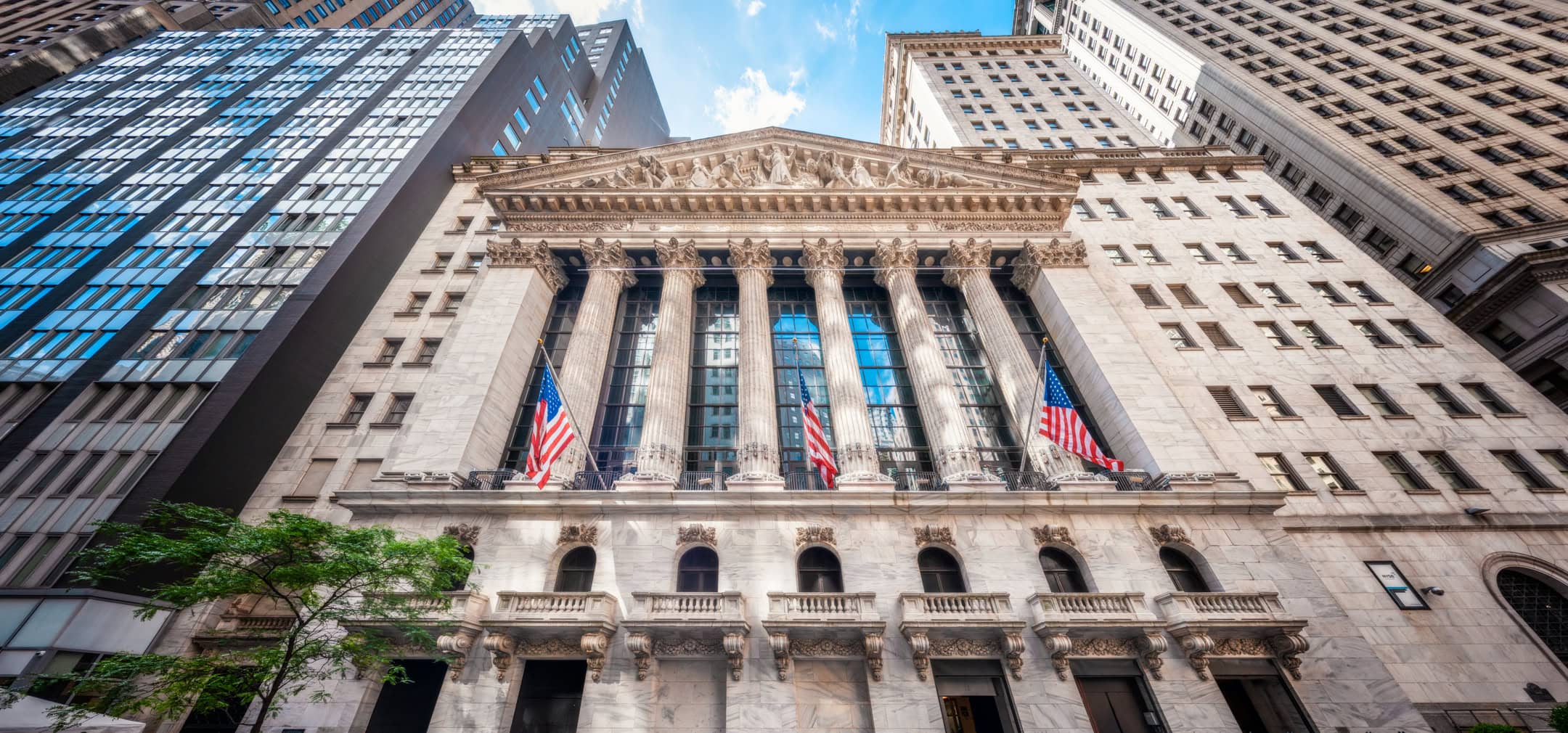
The New York Stock Exchange at Wall Street is both an architectural icon and a financial landmark of lower Manhattan.
I’ve always been fascinated by economics and investment, so the New York Stock Exchange and Wall Street were a must-visit for me and Daria when we were visiting New York.
The NYSE has grown alongside the American economy, eventually becoming the world’s largest by market capitalization. The trading floor remains an important symbol of financial markets and hosts ceremonies such as company listings and the famous opening and closing bells.
The challenge of photographing Wall Street
The current NYSE building opened in 1903 and was designed by architect George B. Post in the Beaux-Arts style. Its imposing façade, monumental columns, and sculptural pediment create an interesting contrast with the surrounding skyscrapers.
For photographers, the New York Stock Exchange offers a unique combination of history, architecture, and typical New York atmosphere, with the contrast between classical and modern reflecting the continuous development of Manhattan.
I have to admit, though, that I was surprised at how difficult it was to get shots there. It’s extremely touristy, crowded and chaotic, with a lot of areas closed down, probably for security reasons. On top of that, everything in Manhattan is super narrow, and there isn’t much space to get away from the buildings and play with wider perspectives.
In general, let’s say there’s little room to manoeuvre!
Ultimately, I decided to use that dense atmosphere as a medium to reflect this feeling of confinement, and how the NYSE building feels a bit cramped by all the skyscrapers that nowadays make the Manhattan skyline.
General tips for taking photos in Manhattan
In theory, pedestrian traffic is lighter in the early morning, although I wouldn’t bet on that since this is one of the most visited destinations on Earth. As I did with this photo of the NYSE, looking upward can help avoid the crowds inside the frame, while also creating emphasis on the buildings. I did the same in this photo of Times Square.
A wide-angle lens is also ideal for fitting more of the building into the frame. On the other hand, instead of trying to capture the entire structure, you can also consider focusing on details such as columns, sculptures, or flags. In this photo of Trump Tower, for example, I decided to give the spotlight to the Trump Tower Clock.
Wall Street and the Oculus are in the Lower Manhattan section of my USA travel guide.