
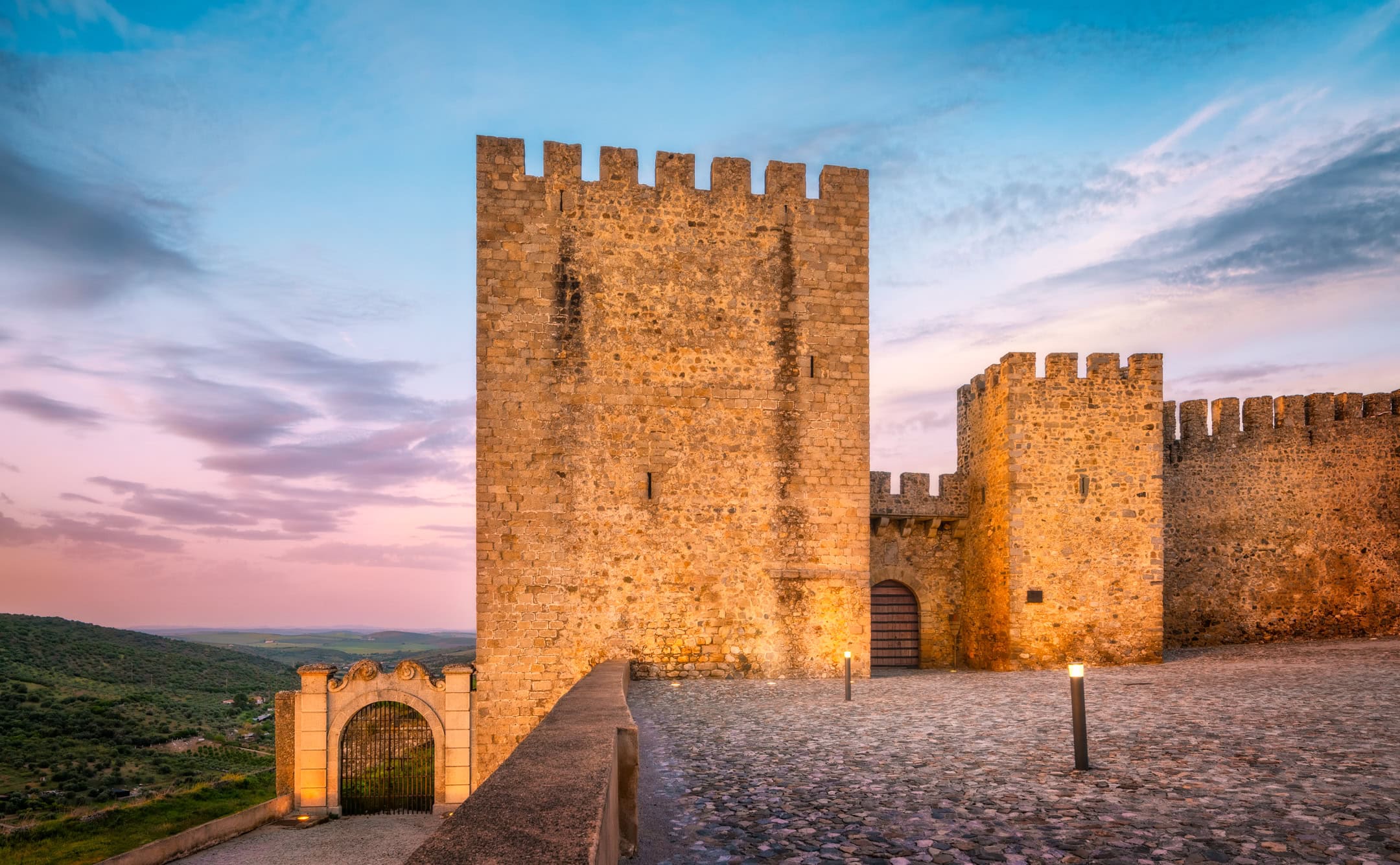
Elvas Castle crowns the highest point of the walled town of Elvas, in Portugal’s eastern Alentejo, just twelve kilometers from the Spanish border.
The Castelo de Elvas has never been a royal residence or a place of luxury. Maybe this is why I found it to be less refined than many other castles in Portugal, like the Óbidos castle or the Pena Palace in the Sintra mountains. It was built for the purpose of defense, as Elvas remained on the front line of Portuguese-Spanish conflict for centuries.
What makes Elvas Castle remarkable isn’t decorative flourish, but its role within one of Europe’s most complete systems of frontier defense. The castle is only the oldest layer of the wider fortifications of Elvas, a network of bastioned walls, moats, and forts developed over centuries.
A cozy afternoon at a low-key medieval fortress
The Castelo de Elvas has a beautiful exterior layout, even if it’s smaller than other castles in the country. It is especially captivating during sunset when the golden sun illuminates the castle walls.
However, I would definitely recommend stopping by the castle during the day when the gates are open. Inside, there is a cozy courtyard with a nice little cafe, where you can take refuge on a hot day under the shade of the trees and enjoy a good Portuguese coffee and egg yolk sweet.
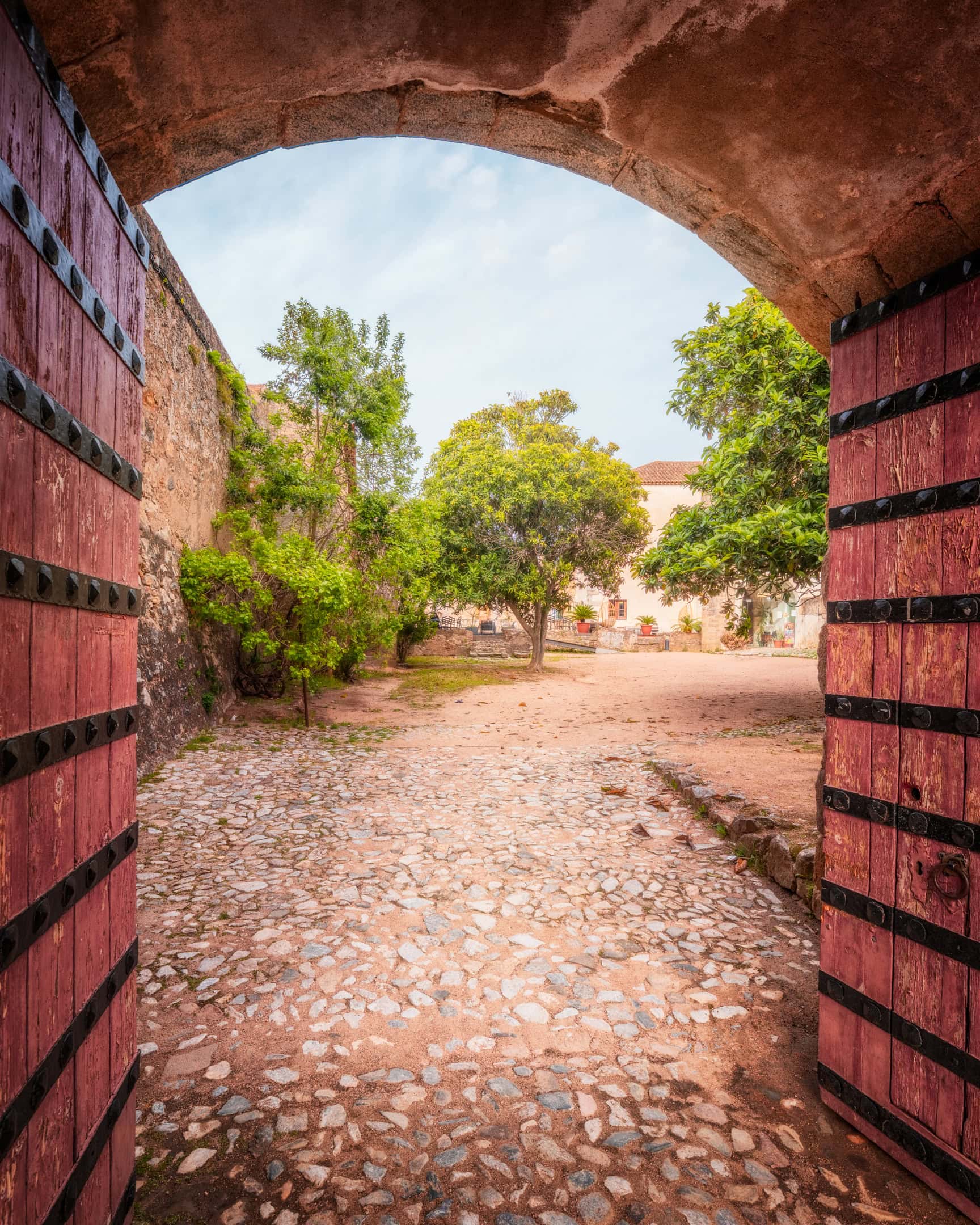
Visiting Elvas Castle should be taken more as an unhurried experience, in my opinion, the opposite of a polished, ticket-line tourist attraction. I still insist it’s worthwhile, not only for the views but for the sense of standing somewhere genuinely fought over for centuries.
Interesting facts about Elvas Castle
- Thanks to the activism of a group of history lovers in Elvas, the Castelo de Elvas became the first Portuguese National Monument in 1906.
- Besides overlooking the town and fortifications of Elvas, you can also see Spain from the top of the castle. Of course, this was deliberate for keeping an eye on the old enemy.
- The Castelo de Elvas predates the founding of Portugal itself, with its earliest fortifications built during Roman and later Moorish occupation.
- Nearby stands the Amoreira Aqueduct, one of the longest in Europe, built partly to keep the fortified town supplied with water during long sieges.
From the castle, it’s an easy downhill walk to Praça da República, the town’s main square and the natural place to close out a visit. The square is anchored by the former Elvas cathedral and surrounded by a handful of café terraces where one can simply unwind in the chill, Portuguese way.


