
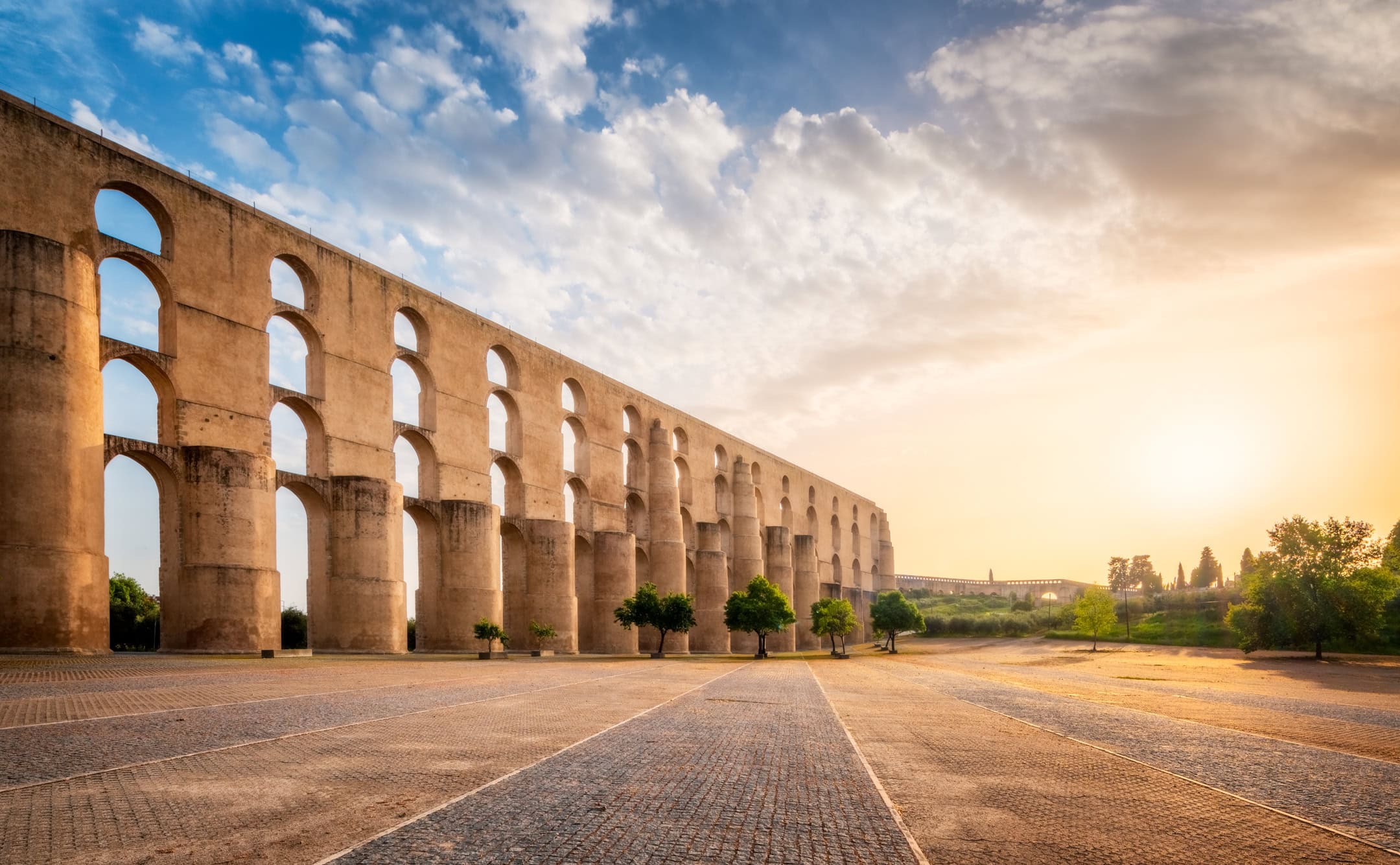
The Amoreira Aqueduct is a 16th-century monumental structure stretching nearly 8 kilometers on the outskirts of Elvas, in Portugal.
This impressive aqueduct is impossible to miss when you’re visiting Elvas, and I felt I had to do a little series of images because only one photo would not have captured the full essence of such a remarkable site.
The Amoreira Aqueduct is considered one of the largest of its kind on the Iberian Peninsula, and today it stands not only as an engineering landmark but as a symbol of a border city that was built for protection and defense.
A long history written in stone
The history of the Aqueduto da Amoreira is quite interesting. It is not a Roman structure, even if it looks Roman-inspired; the construction works began much later. Progress stalled repeatedly over decades before gaining momentum with architect Francisco de Arruda, known for his work on the Belém Tower, as well as Casa da Cultura and the former Cathedral of Elvas.
After Arruda, the project passed through several other architects before being completed. This multi-generational construction is visible in the aqueduct, especially in variations in the stone, proportions, and techniques, which mark the different phases and hands involved.
The Amoreira aqueduct was not just a water channel, but also a defensive-minded piece built to endure the fortress city of Elvas. It was declared a National Monument in 1910.
Photographing the Amoreira Aqueduct
After spending a beautiful day in Elvas, walking around the center and the Elvas Castle, I was inspired enough to take a walk around the Aqueduto da Amoreira and find various compositions.
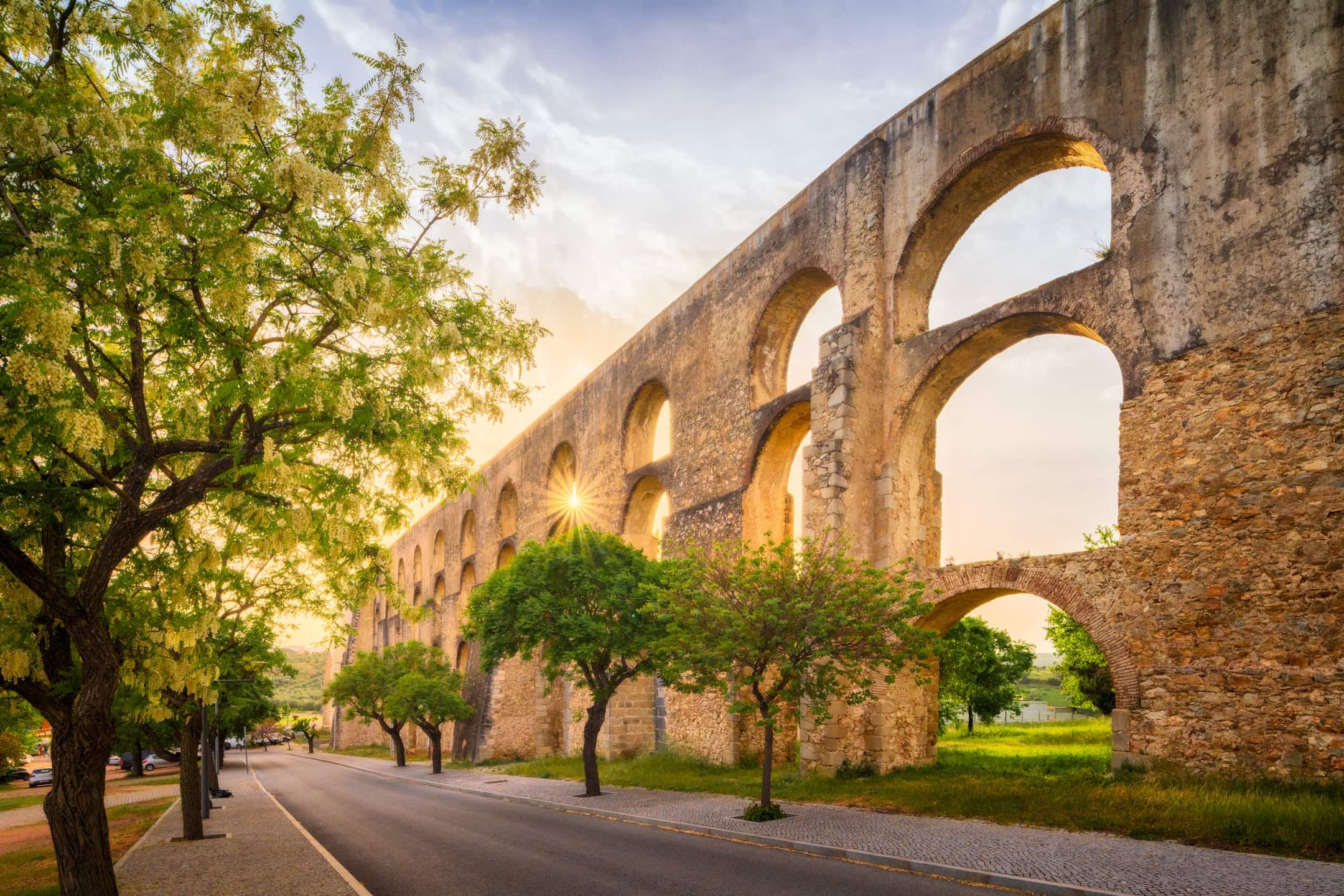
Sunset and stone are always such a deep combination. You can see how the late afternoon casts warm, low-angle light across the stone arches, creating strong shadows and light bursts between the columns.
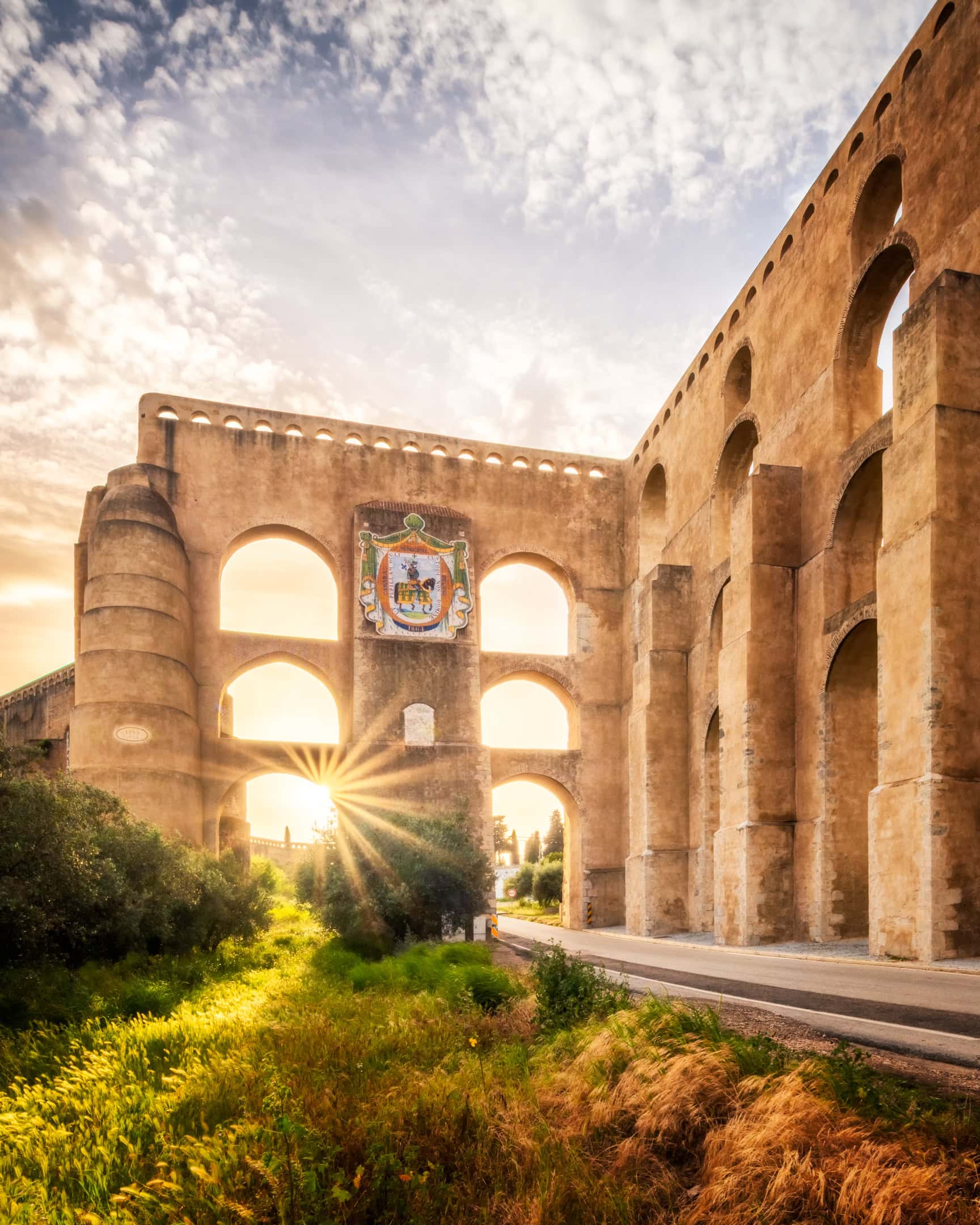
I also wanted to photograph the coat of arms that was on one stretch, where the aqueduct spans a little street. I later learned that this is the coat of arms of Elvas, which apparently wasn’t originally meant for the aqueduct but for a nearby fountain. Due to a sizing mistake, it was mounted here instead, fitting perfectly.
The Portuguese Tuscany?
Just when I thought I was satisfied with the session, I noticed the cypress trees around the Aqueduto da Amoreira. I loved taking this photo because I’ve heard that Alentejo is frequently compared to Tuscany, but I never grasped why until I was witness to this scene.
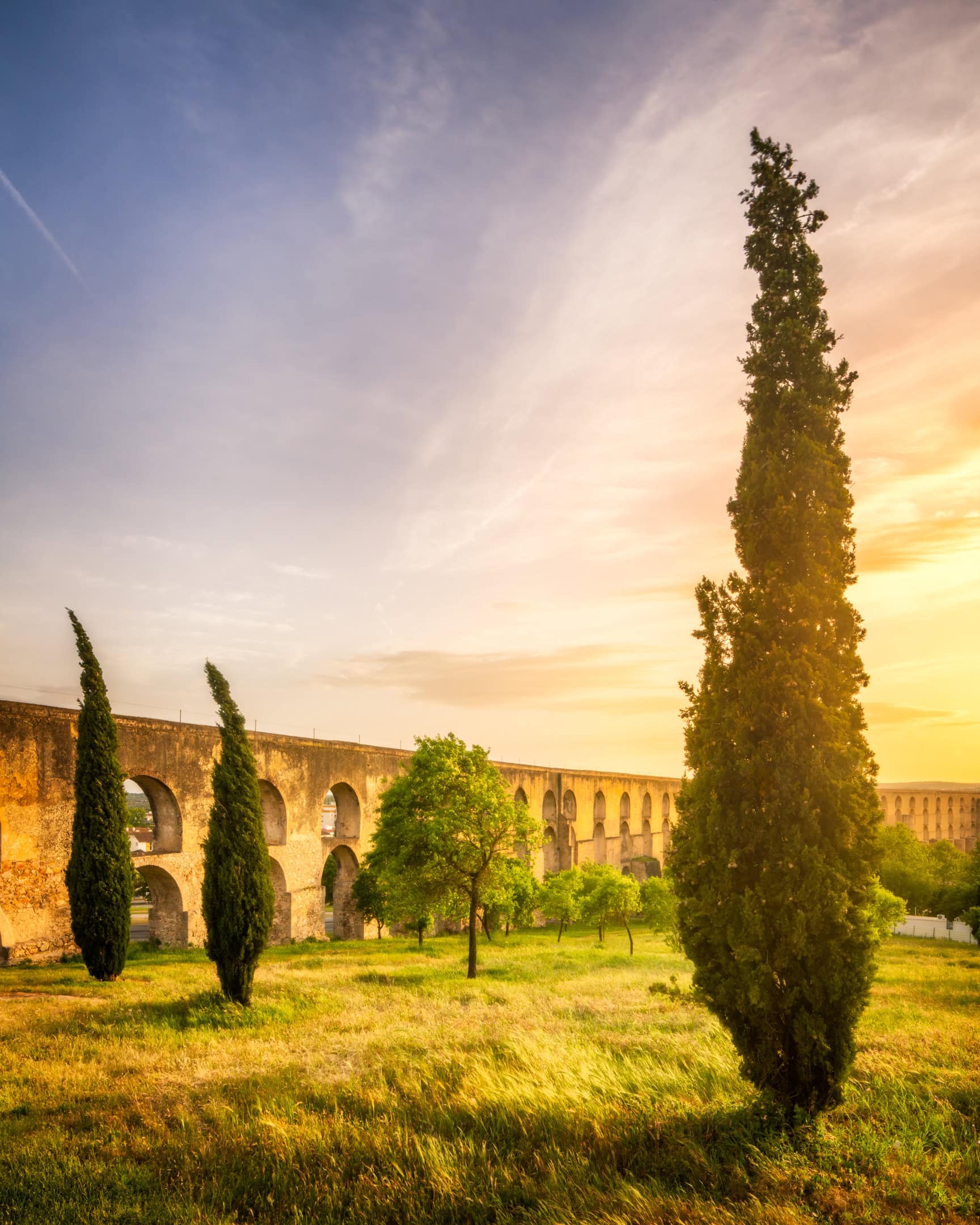
Beyond the cypress and olive trees, the rolling plains, and the terracotta, there is some sort of shared spirit between Alentejo and Tuscany. Except, you know, that Tuscany is a hundred times more touristic than Alentejo, while the latter is probably equally beautiful and rich in sights to see.
That’s what this photo means to me: my little homage to what I feel is the Portuguese Tuscany. You can read more about my infatuation with Alentejo in this post about the Castelo de Mourão, or in the one about the Convento do Espinheiro near Évora, which keeps an aqueduct of its own.


