
Manteigas is a mountain town in Portugal’s Serra da Estrela, set on the floor of the Zêzere valley. The valley was carved by a glacier, and it lies inside the Serra da Estrela Natural Park. Within a short drive of the town, you find a waterfall, a beech forest and granite cottages under moss.
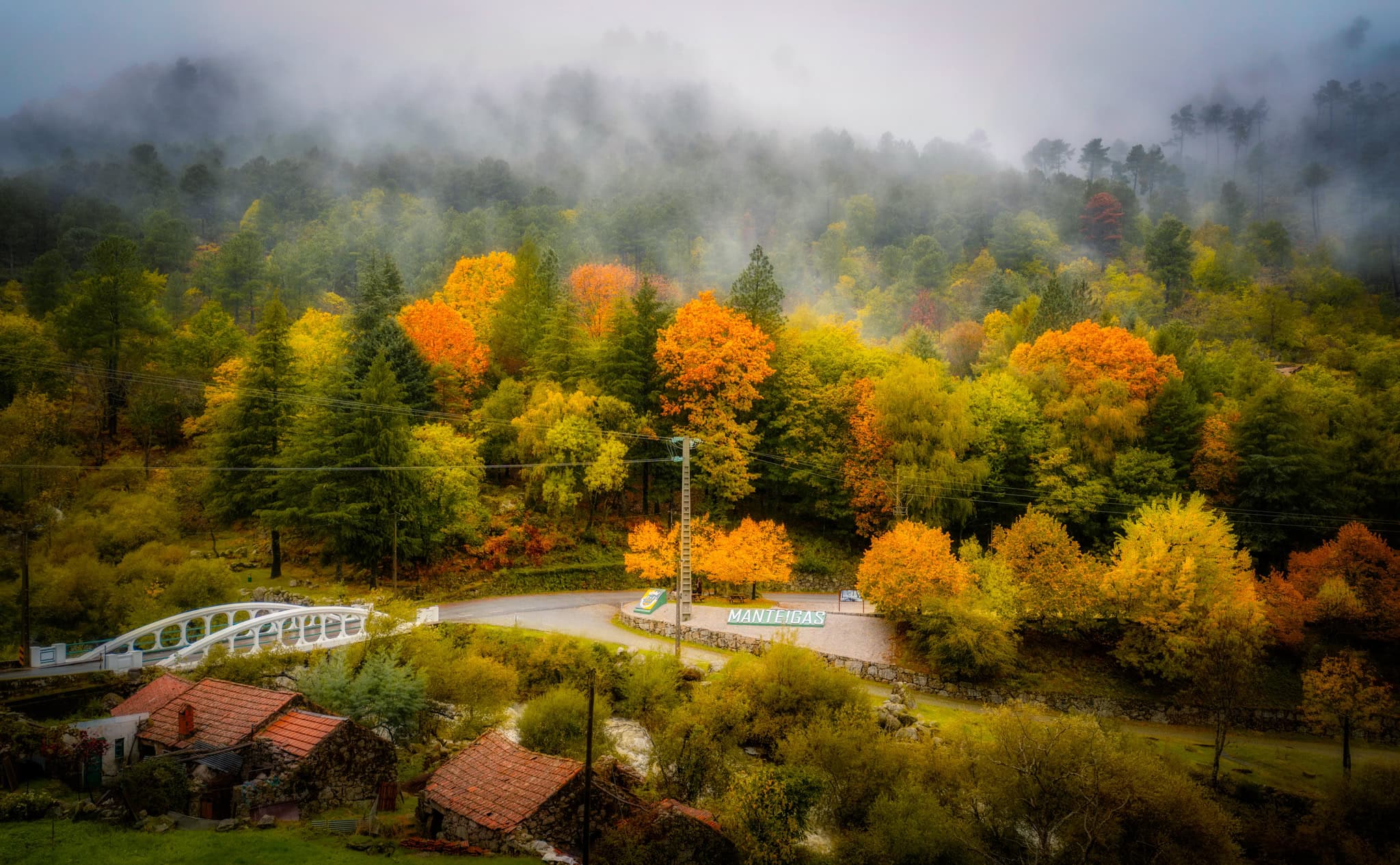
Autumn in Manteigas
We drove into the valley on the first day of November, in rain. Fog was rolling off the ridges, and the slopes had turned yellow, orange and red. Lisbon barely has an autumn, so this was the reason for the trip.
My frame of the town entrance in fog and autumn colour comes from that first wet morning. Stone cottages with terracotta roofs fill the foreground. Behind them, a white arched bridge and the town sign sit under a hillside of colour. Above it all, the fog closes the frame.
I shot it at 24mm and f/2.8, at 1/320 s. Fog brightens easily, so I exposed for the highlights in the trees, not for the fog. As a result, the colour stays rich, while the fog keeps its mood.
Two photographer friends came with me. Over two days, we worked the valley in rain, fog and finally sun.
Poço do Inferno
The name means the Well of Hell. It is a ravine above Manteigas, where the Ribeira de Leandres drops through a chain of cascades. The main fall is about 10 metres high, at roughly 1,080 metres of altitude.
You hear it before you see it. First, the road climbs and narrows, and then the forest opens just enough for the water.
We reached it late on the first afternoon. The ravine is steep and dark, even at midday, so by then it was dim. For the main drop of the Poço do Inferno, I used a tripod, f/4 and 2.5 seconds. Meanwhile, the spray coated everything, including the lens.

However, the main fall is only the start. A few metres downstream, the stream squeezes through a narrow chute of mossy granite. Further on, a fallen trunk turns it into a natural weir. Each drop has its own rhythm, so I treated the place as a series, not a single shot.


Rota das Faias
The Rota das Faias is a circular trail of about 6.5 km near Manteigas. It runs through a beech wood planted by the forestry services in the early 20th century. From late October to mid-November, those beeches turn gold.
On the second day, the sun finally came out. Inside the wood, sun makes all the difference, because beech leaves lit from behind turn into stained glass. Meanwhile, the pale trunks give the frame a vertical rhythm, and the bracken below turns orange.
For the backlit beech forest, I used 35mm and f/10. That focal length holds the density of the wood without distortion. At f/10, the trunks stay sharp from front to back.

Then I switched to the telephoto. From across the valley, at 132mm, the slope becomes a mosaic of red and orange, cut by dark conifers. After that, I looked straight up. Still, not every tree on the trail is a beech. One of my best frames is an oak, its lobed leaves lit against a blue sky.


Moss-Covered Houses
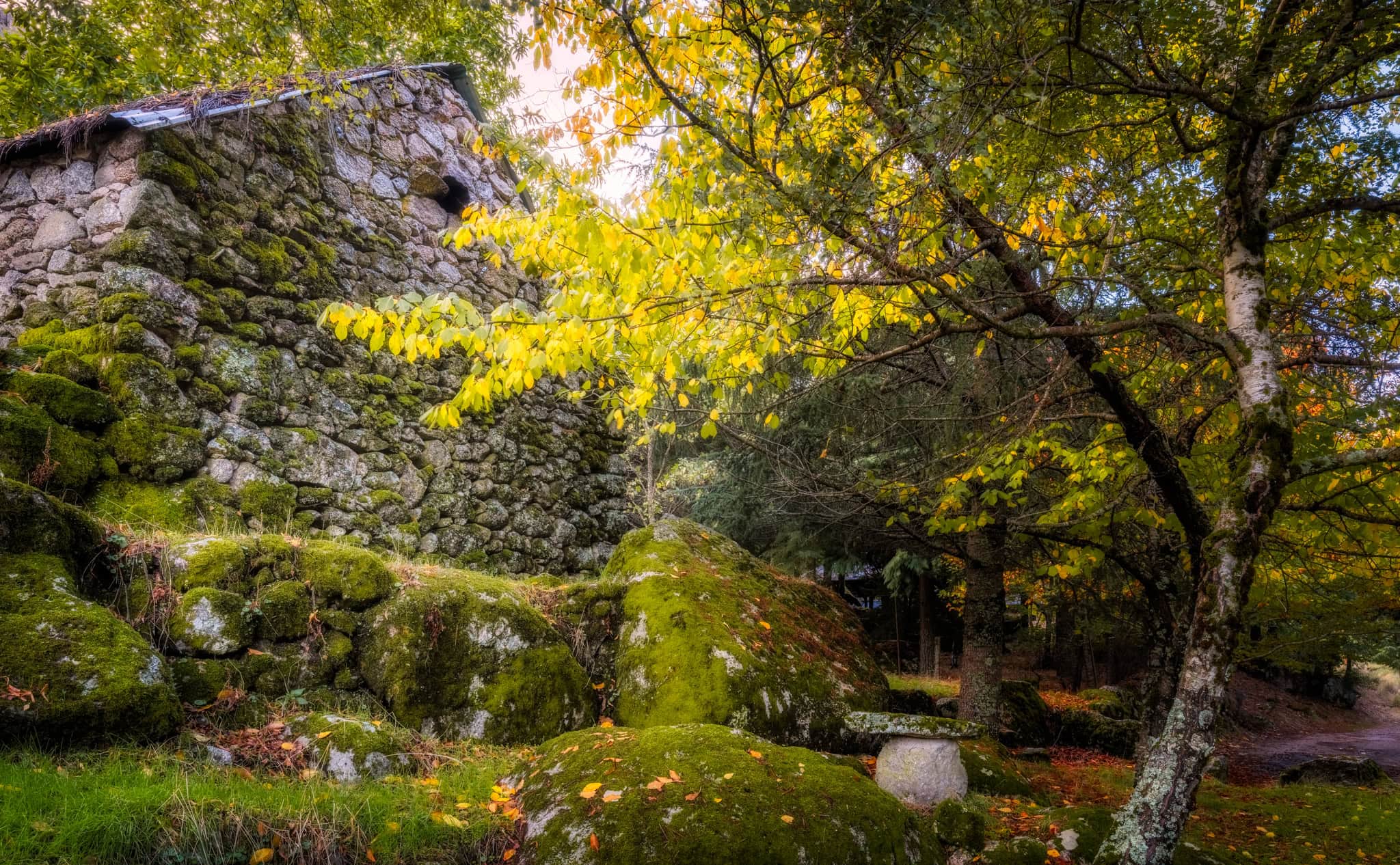
I went into the forest for autumn colour. Instead, I found a cluster of granite cottages that moss, trees and time are slowly taking back. Dropping the original plan was the best decision of the trip.
We came on the second morning, in flat, diffused light. That light keeps contrast low, so the greens and browns hold together. In the hero frame of the moss cottages, rough stone steps lead past boulders upholstered in moss. At the top, the cottage door waits behind the branches.
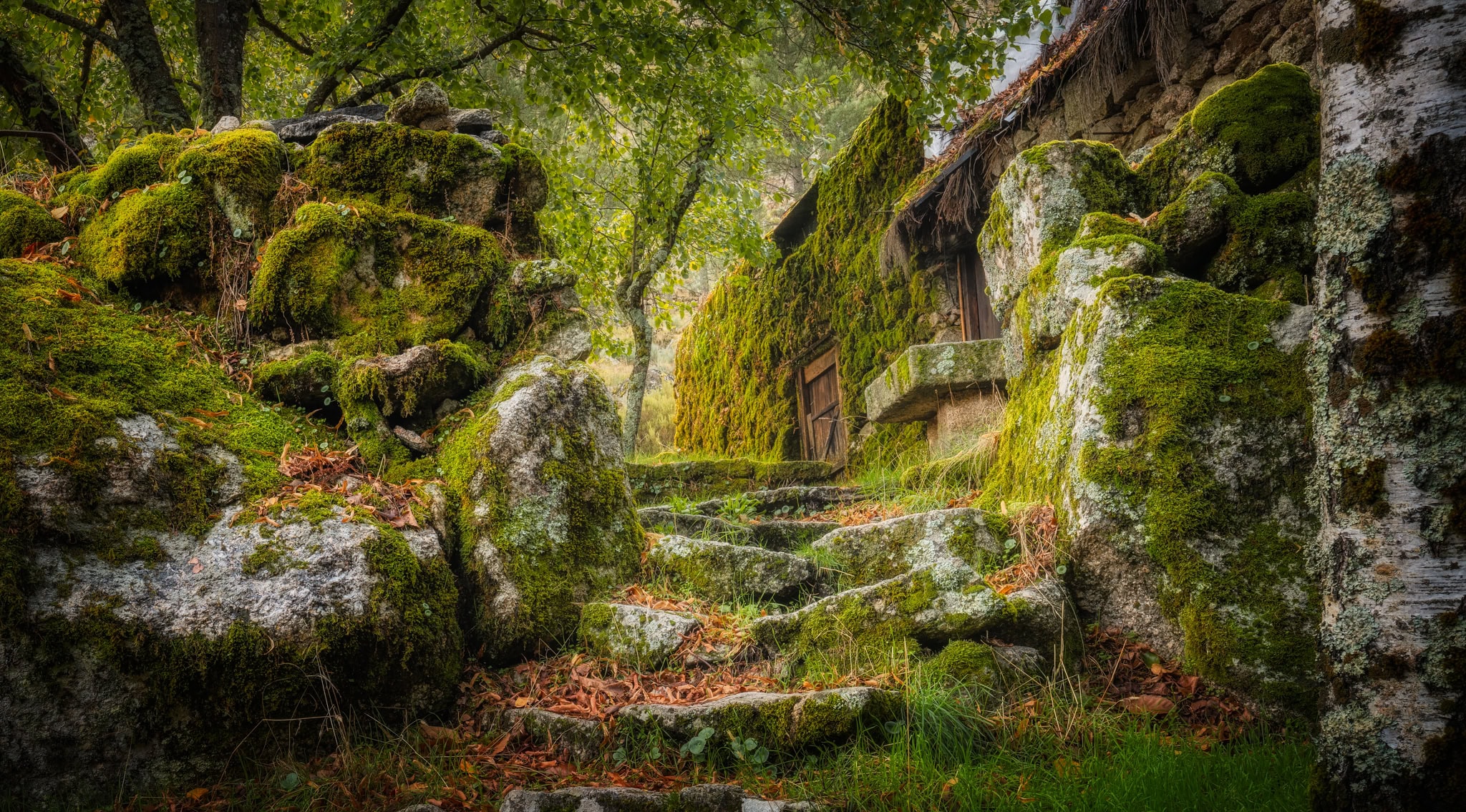
Every frame here is at f/13, so every texture stays sharp. As a result, the shutter ran from 1/400 s down to a full second. For the slow ones, I used a tripod.
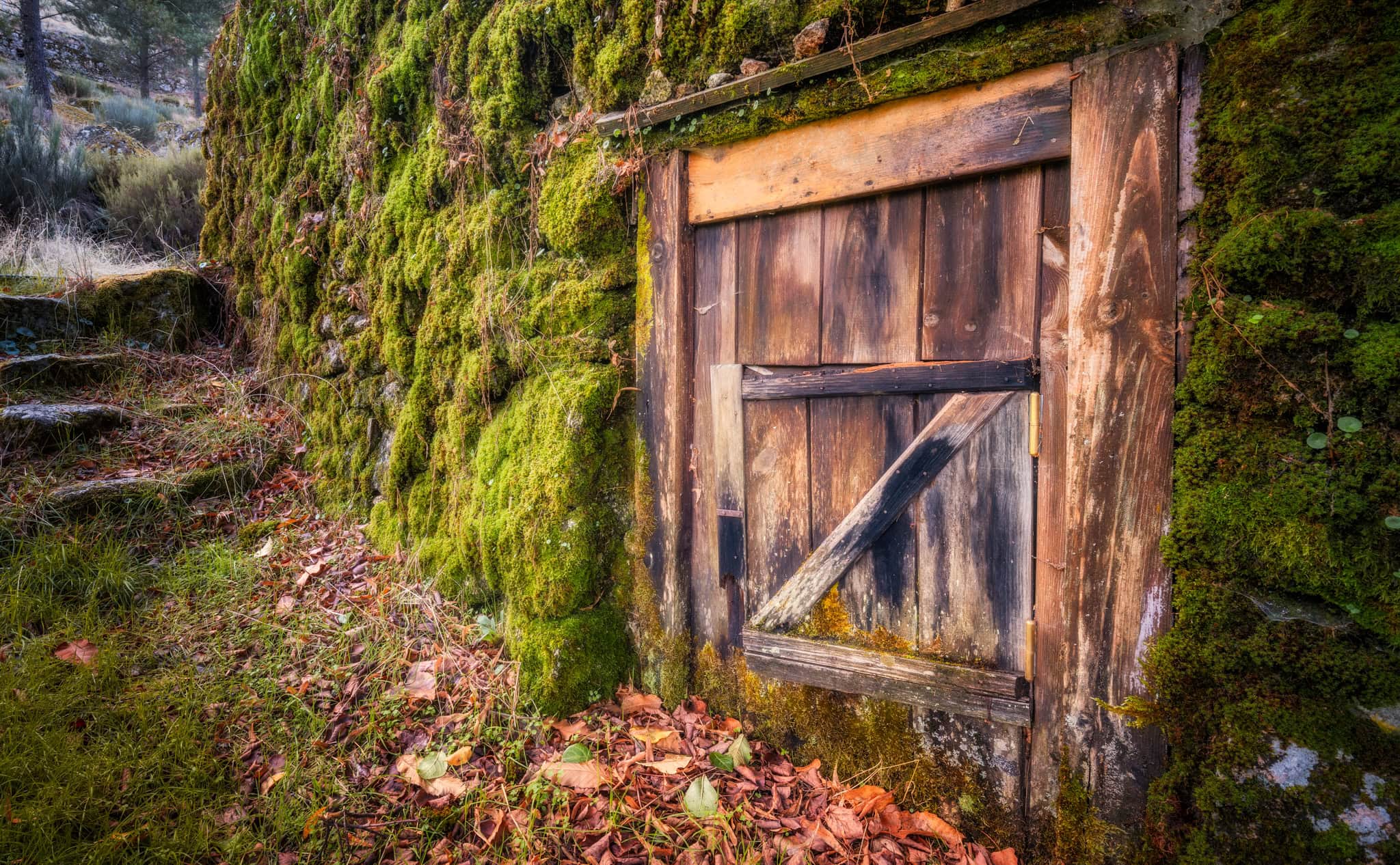
I worked the scene wide, medium and tight. For example, the tight frame is a weathered wooden door, set into a wall of emerald moss. Fallen leaves at its foot give away the season.
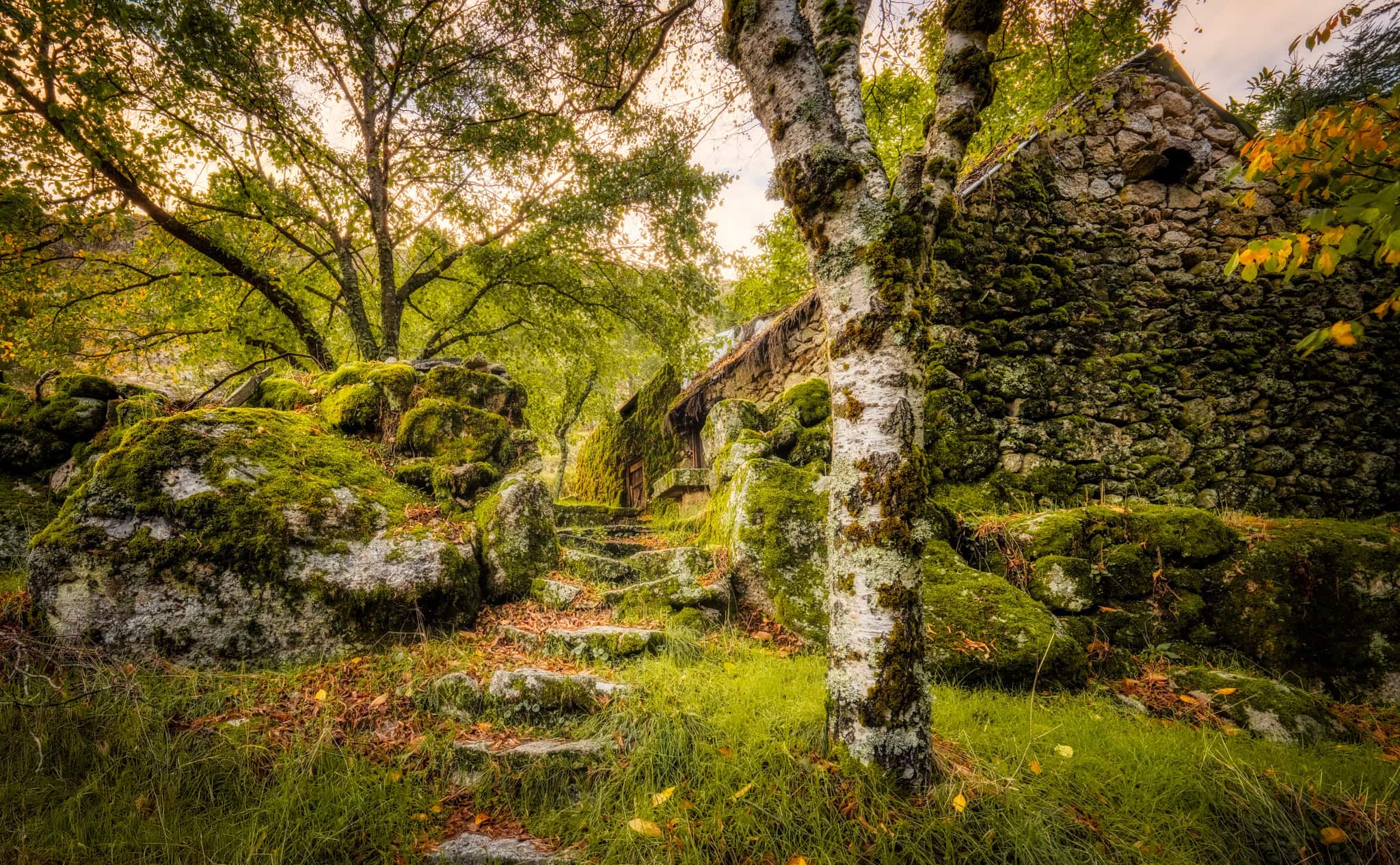
For the wide frames, I stepped back. A birch trunk anchors the foreground, while the steps run diagonally to the house. In the last frame, yellow chestnut leaves hang over the granite wall. Ultimately, that was the only autumn colour I needed.
Zêzere Glacial Valley
During the last ice age, a glacier filled the upper Zêzere valley. At its maximum, the ice reached the place where Manteigas stands today. Consequently, the valley has a textbook U-shaped profile, about 10 km long, running up from the town.
Further up, at the head of the valley, rises the plateau of Torre. At 1,993 metres, it is the highest point of mainland Portugal. It also carries Portugal’s only ski resort.
Since 2020, the whole area has belonged to the Estrela UNESCO Global Geopark. Its nine municipalities include Manteigas. UNESCO lists the Zêzere valley among its glacial landforms, next to granite boulders and grazing sheep.
For photographers, then, the valley is the frame-maker. It funnels fog in the morning and holds colour on both slopes. So a road along the valley floor already gives you the composition.
Food and Craft in Manteigas
Sheep shaped this valley as much as the ice did. Queijo Serra da Estrela, the mountain’s famous cheese, is made from sheep’s milk and curdled with thistle. When ripe, it is soft enough to eat with a spoon.
Similarly, wool built the town. Manteigas once had many wool mills, and burel was its signature cloth. That dense, felted wool kept the shepherds dry on the mountain.
Eventually, the last mill closed. Then two newcomers, Isabel Costa and João Tomás, bought its old looms and rehired the weavers. Today, Burel Factory sells that same cloth as a premium design product.
For me, that is the lesson of Manteigas. A product with a real place and a real story behind it can carry a premium price. I build print sales on the same principle.
Photographing Manteigas
Two days in the valley gave me four separate series. They cover the town in fog, the waterfall, the beech trail and the moss houses. Afterwards, each one became its own photo page.
That is how I plan a trip like this. Firstly, the weather decides the subject. Rain and fog suit the town and the waterfall, because overcast light keeps the ravine even. By contrast, sun belongs to the beech forest, where backlight does the work.
Secondly, a long lens matters here as much as a wide one. The mountain slopes are too big to frame whole. With a telephoto, however, you can pull a single mosaic of colour out of them.
Finally, pack a tripod. Between the dark ravine and the dense forest, half of my frames from this trip needed one.
When to Visit Manteigas
The best time for photography is from late October to mid-November. During those weeks, the beeches and chestnuts turn, and fog fills the valley most mornings. My frames are from the first two days of November.
Winter brings snow to Torre, and in the hardest winters, the Poço do Inferno freezes. Later, spring turns the valley green and fills the streams. Summer is the hiking season, although the low valley gets hot.
Above all, you need a car. From Lisbon, the drive takes about three hours, mostly by motorway. From the university city on the Mondego, it is about two hours. Manteigas also fits into a longer route through Portugal, between the coast and the Spanish border.
Frequently Asked Questions
Is Manteigas worth visiting?
Yes. Manteigas sits in a glacial valley in the Serra da Estrela, Portugal’s highest mountain range. Within a short drive, you find the Poço do Inferno waterfall and the beech forest of the Rota das Faias. Above them rises Torre, the summit plateau. Each November, the valley is one of the few places in Portugal with real fall colour.
When is the best time to see autumn colours in Manteigas?
The beech forests usually turn from late October to mid-November. However, peak colour varies with each year’s weather, so check recent photos before you travel. Early November tends to bring fog in the mornings as well.
How do you get to Manteigas from Lisbon?
The easiest way is by car. The drive takes about three hours, mostly on motorways, followed by mountain roads into the valley. Public transport to Manteigas is limited. Therefore, a car is also the only practical way to reach the waterfall, the beech trail and Torre.
How long is the Rota das Faias?
The Rota das Faias (PR13 MTG) is a circular trail of about 6.5 km. It starts at Cruz das Jugadas, a short drive from Manteigas, and takes two to three hours on foot. Most of it runs through beech forest planted in the early 20th century.
How high is the Poço do Inferno waterfall?
The main fall is about 10 metres high. It lies at around 1,080 metres of altitude on the Ribeira de Leandres, above Manteigas. Below the main drop, the stream continues through a chain of smaller cascades. In the hardest winters, the waterfall freezes.
What is Manteigas known for?
Manteigas is known for its glacial valley, the Zêzere, and for its wool. Burel, the felted wool cloth of the Serra da Estrela shepherds, is still woven in the town today. Moreover, the area is famous for Queijo Serra da Estrela, a soft sheep’s milk cheese.
How many days do you need in Manteigas?
Two days cover the essentials. Spend one day on the town and the Poço do Inferno. Then give the second to the Rota das Faias and the moss-covered cottages. Add a third day for Torre and the high plateau, especially if the weather turns.


