
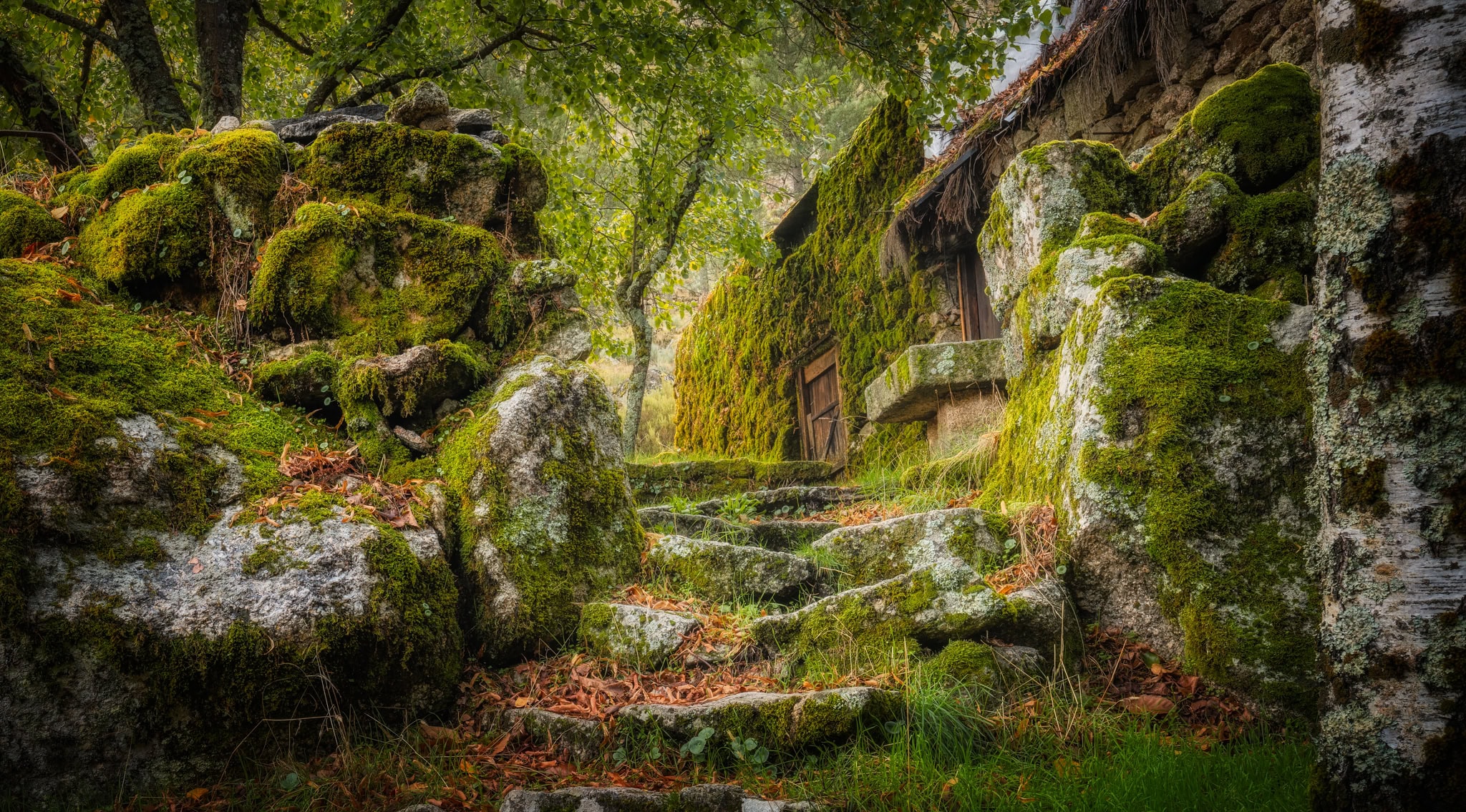
When you head out for a trip, you might have a plan in mind: “let’s go shoot autumn colours.” Be ready to throw it overboard when something unexpected appears. Here’s a series of Manteigas Moss Covered Houses I stumbled upon in the Portuguese mountains earlier this month.
Moss Covered Houses Manteigas – when the plan changes in the best possible way
You know that feeling, when you head out with a clear idea of what you should shoot… and something completely different whispers, “Hey, over here”?
That’s what happened with these Moss covered houses Manteigas hides in the forest above town. I went looking for orange leaves and dramatic vistas. Instead, I found a forgotten cluster of stone cottages slowly being reclaimed by moss, trees and time.
And honestly? Letting go of the original plan was the best decision of the whole trip.
Scene One: Stairway to the moss cottage
In the hero shot, your eye climbs those rough stone steps, past boulders upholstered in thick moss, towards the cottage half-hidden behind branches. The whole frame feels like an invitation: Do you dare see what’s behind that door?
Why this scene works
The staircase acts as a strong leading line.
The moss-covered rocks frame the path and add depth.
Soft, diffused mountain light keeps contrast gentle so the greens and browns really sing.
Hero EXIF – “Manteigas Moss Covered Houses scene one”
Camera: SONY ILCE‑7RM5 (Sony Alpha 7R V)
Aperture: f/13
Shutter speed: 1/6 sec
ISO: 100
At f/13 the steps, boulders and cottage all stay sharp, which is important in a scene where textures tell the story. The 1/6 sec shutter meant a tripod (or very steady hands), but it also kept ISO low for maximum detail in the moss.
If you ever find a scene like this, don’t rush it. Lock in your composition, then slowly fine‑tune depth of field until every important texture is crisp. The moss is the hero; let people feel it with their eyes.
Scene Two: The wooden door in a sea of green
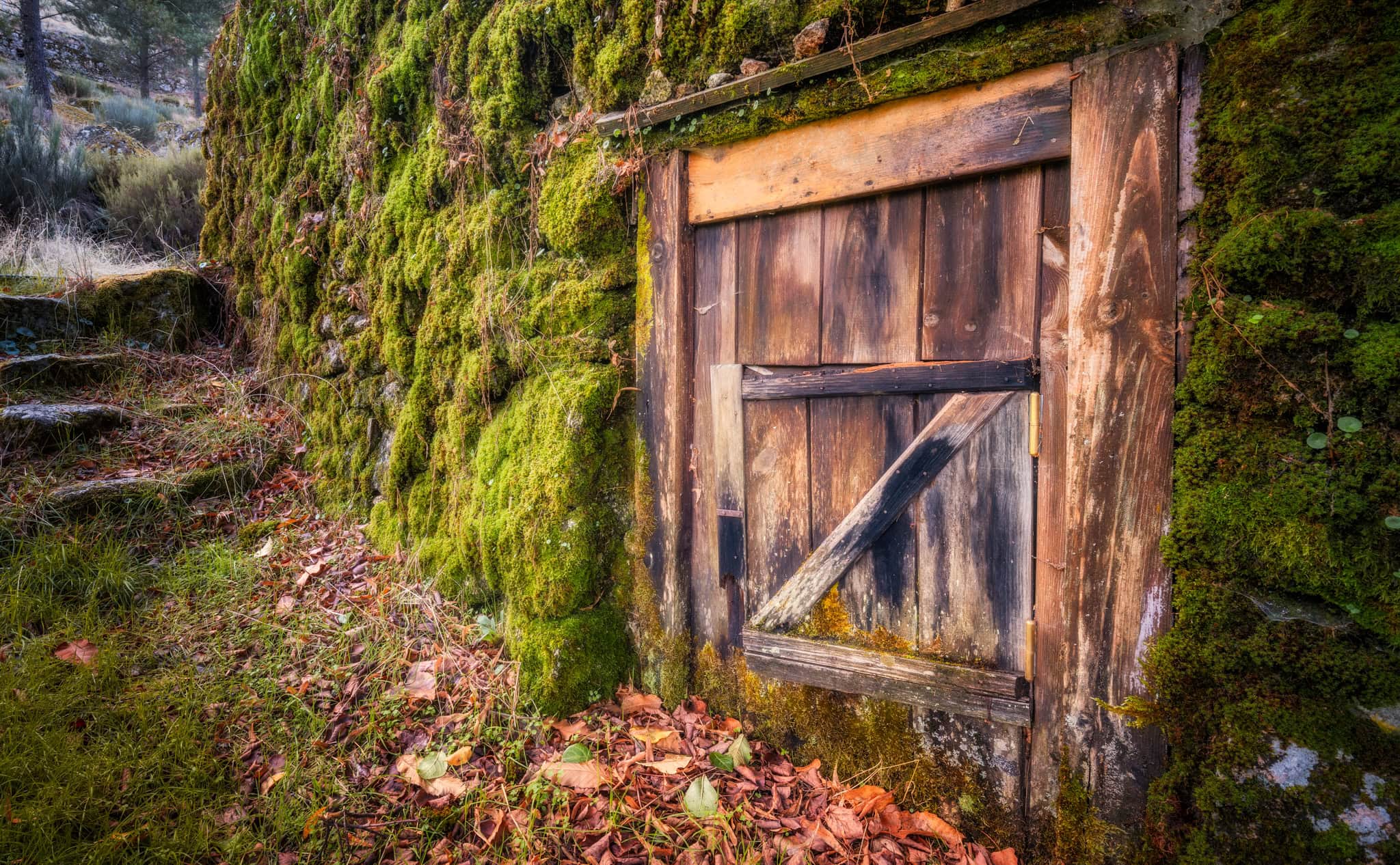
“Scene two” moves in closer to that weathered wooden door. Gone is most of the forest context – now it’s just vertical planks, rusty hinges, and a wall that looks like it’s being slowly eaten by emerald velvet.
This kind of frame is about intimacy rather than exploration. You’re not asking, Where does this path go? You’re asking, Who lived here? When was the last time this latch turned?
Why this scene works
Tight framing simplifies the story to “man-made vs. nature”.
The warm tones of the old wood pop against the cool, damp moss.
Fallen autumn leaves at the bottom edge hint at the season without dominating.
EXIF – “Manteigas Moss Covered Houses scene two”
Camera: Sony ILCE 7RM5
Aperture: f/13
Shutter speed: 1 sec.
ISO: 100
When you find an interesting location, force yourself to shoot wide, medium and tight variations. Scene two is the “tight” version – the detail that turns a location into a story.
Scene Three: Forest guardians
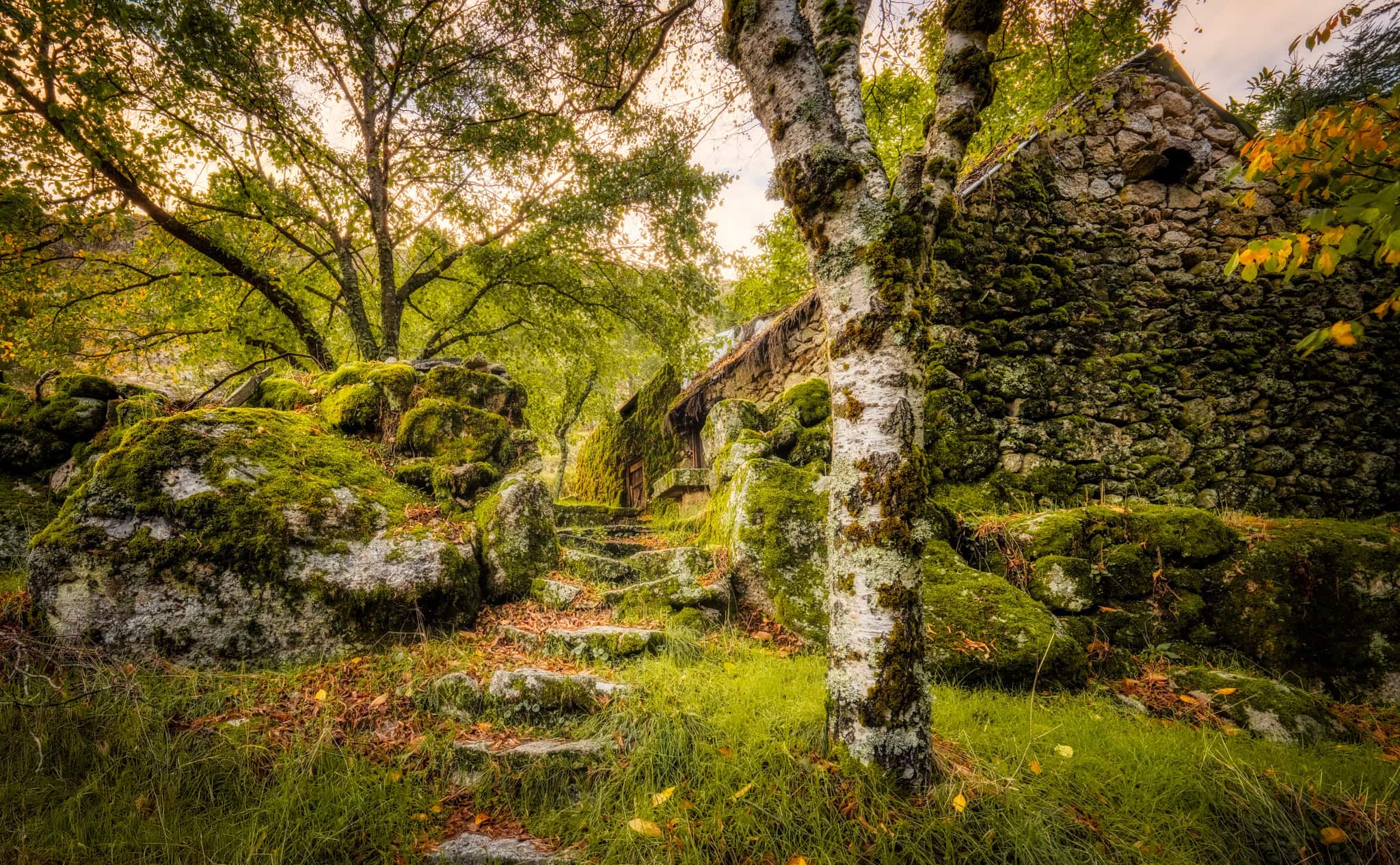
In “scene three” you step back again. A birch trunk anchors the foreground while the moss-covered stairway and cottage run diagonally through the frame. On the right, a stone wall feels like a natural extension of the forest.
This image connects the houses to their environment. They’re no longer isolated ruins; they belong to this hillside, these trees, this particular autumn day.
Why this scene works
The tree in the foreground adds depth and scale.
The path draws the eye from bottom centre to the hidden house.
Soft golden light in the sky hints at the day’s last light, adding warmth.
EXIF – “Manteigas Moss Covered Houses scene three”
Camera: Sony ILCE 7RM5
Aperture: f/13
Shutter speed: 1/400 sec.
ISO: 100
If you’re ever stuck on composition, ask: What could I put in the foreground that belongs to this place? In forests, a single tree trunk does wonders for depth and storytelling.
Scene Four: Autumn canopy over stone and moss
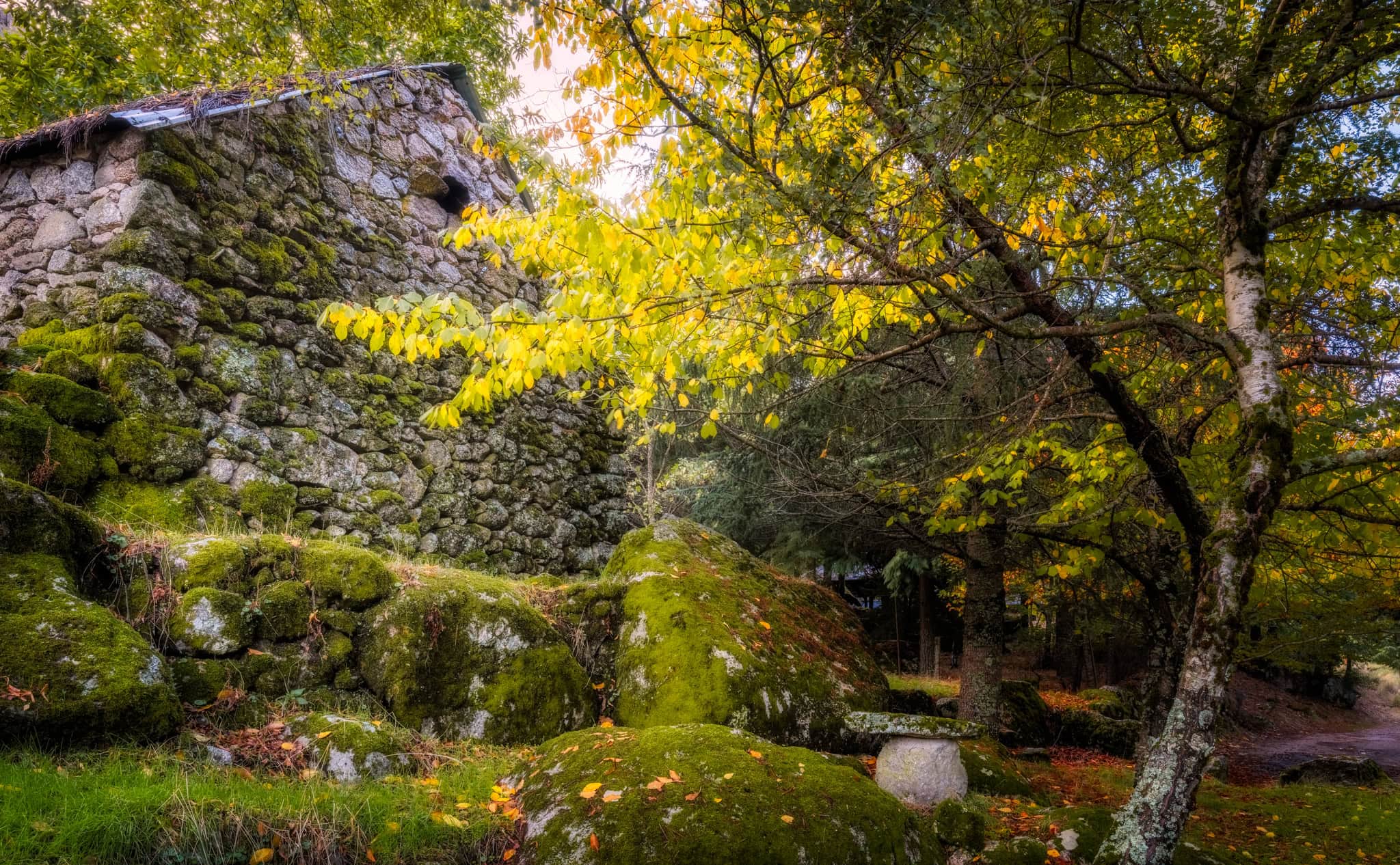
“Scene four” pulls the viewer further to the side. Now you see more of the roofline, the thick stone wall and a bright canopy of yellow leaves above the house. The moss-covered boulders in the foreground echo the shape and texture of the cottage itself.
This frame leans the most into the “autumn colours” I originally went looking for – but still, the moss is the connective tissue between rock, tree and house.
Why this scene works
The yellow leaves give a natural colour contrast to the greens and greys.
The diagonal roofline and tree branches keep the viewer’s eye moving.
The path in the lower right hints that this isn’t completely forgotten – people might still pass here.
EXIF – “Manteigas Moss Covered Houses scene four”
Camera: Sony ILCE 7RM5
Aperture: f/13
Shutter speed: 1/200 sec.
ISO: 100
Moss is one of Earth’s oldest plant groups, able to colonise roofs, walls and cracks in stone where almost nothing else grows. If you’re curious about moss itself – beyond its photographic charm – the botanists at Kew Gardens have a great article on “7 interesting things about moss” that dives into why it’s such a resilient, underrated plant kew.org.
For more inspiring insights check my other blog posts like Manteigas in Autumn | Portugal or winter feels Gubałówka in Snowy Winter | Zakopane, Poland. Read more from my Manteigas trip in Rota das Faias – The Most Beautiful Autumn Trail blog post.


